Become a Member for as little as the price of a croissant and enjoy unlimited reading of TSLL blog. Add the cost of your favorite cuppa and enjoy ad-free reading site-wide, including all exclusive content.
“Once we realize that serendipity is not just about a coincidence that happens to us but is actually a process of spotting and connecting the dots do we start to see bridges where others see gaps. Only then does serendipity start happening all the time in our lives.”
—Christian Busch, PhD, author of The Serendipity Mindset
Maybe, or likely so if you are reading/listening to this episode, you have experienced moments of serendipity. Wonderful chance happenings that you either had hoped for or hadn’t even imagined, but when they happened, it was a welcomed occurrence. And yes, perhaps you too watched the cult classic film with Kate Beckinsale, John Cusack, Molly Shannon, John Corbett, and Jeremy Piven, simply titled Serendipity back in 2001. Was it really that long ago? Wow! Admittedly, that was my first real introduction to the term, and ever since, I have been fond of it, even if not really understanding what it was. But that ignorance is no longer.
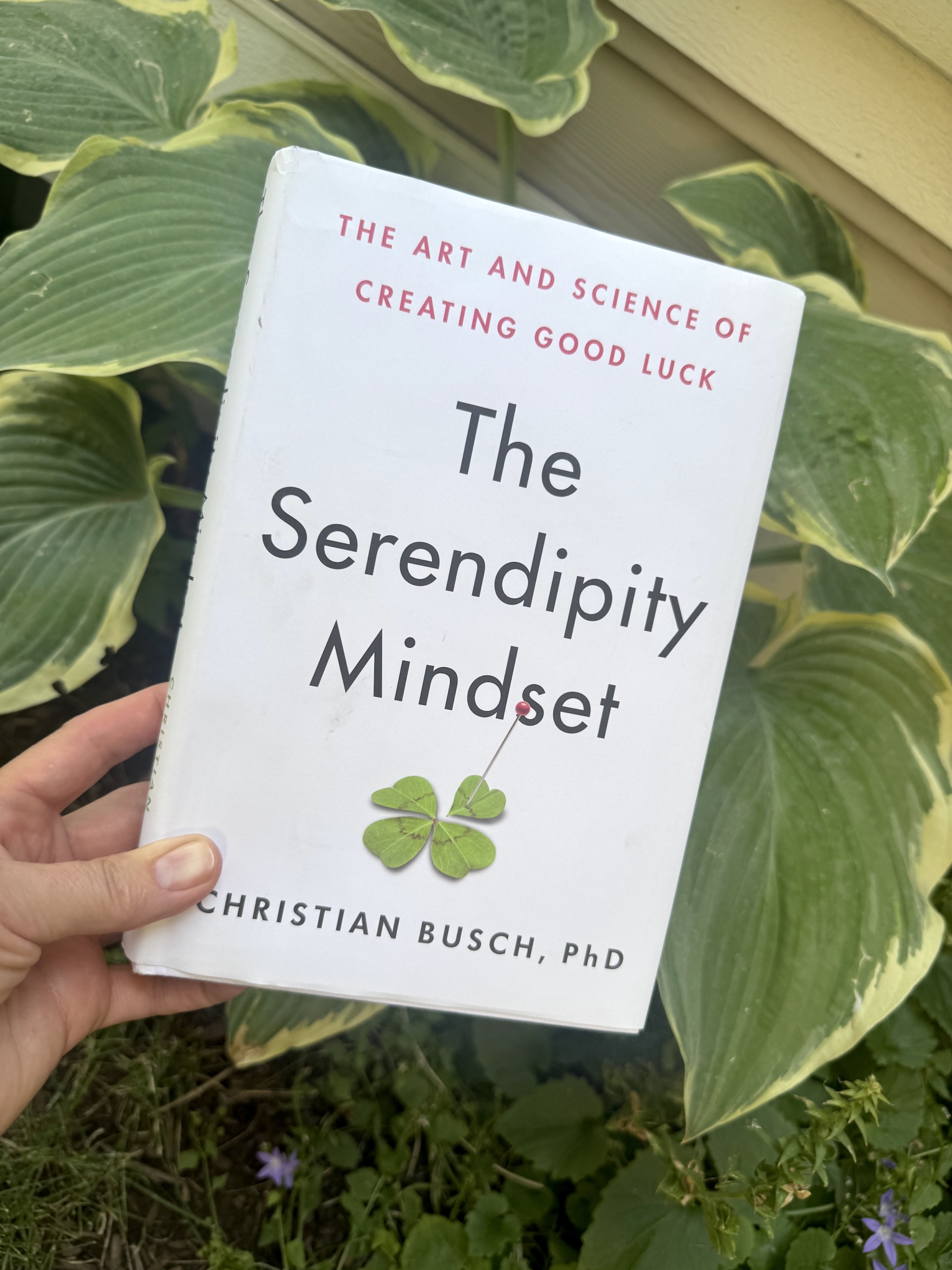
In The Serendipity Mindset, Busch defines serendipity as something that is active, “‘smart’ luck that depends on our ability to spot and connect the dots.” We must first see what he describes as the serendipity trigger, “be able to connect the dots and THEN, develop the tenacity necessary to focus on and influence valuable outcomes.”
Holding this definition in our mind, we understand that serendipity is something we can invest in to increase the chances of it happening and that, to my ears, is very good news.
Today, I’d like to share with you a handful, two handfuls exactly, of ways taught by Busch in his book that we can increase the odds of serendipity happening in our life. This list is merely an introduction as he shares far more in the book. So if today’s episode speaks to you, I highly recommend picking up your own copy. Let’s get started.
1. Set aside biases and preconceptions of the world
Limited thinking narrows what we see as possible and also misinterprets, to our detriment, what had the potential to be a serendipitous moment. Instead, when we hold our mind open, we invite serendipity not only to be seen, but to be seized and capitalized upon.
There are four biases that are explored in the book which the author reveals with ample research why we really cannot know what will happen tomorrow. However, our biases, prevent us from seeing all that is possible. From hindsight bias – thinking upon looking back that there were more patterns and inevitability than there actually were; unexpected bias – thinking that unexpected events happen only occasionally or rarely, when really they are happening all the time all day long; and functional fixedness which limits how we perceive a tool can be used, and it is when we expand to explore possibilities we have never tried that we hold our mind open. The four bias is discussed below in #2.
2. Hear the crowd, but don’t follow the crowd
“The pressure to conform to the majority view can kill serendipity, especially if it makes us ignore or look down on life’s unexpected encounters, or if politics or unhealthy group dynamics take over.”
While it will involve risk, and by knowing what the crowd is saying and doing is helpful, the key here is awareness. Awareness of the world and awareness of why we are doing what we are doing, whether we do choose to do something that goes along or tangentially aligns with the crowd or not.
3. Be present
“If we are not alert, if our minds are not prepared to notice the valuable anomaly or insight, we are not merely missing potential serendipity, we are actually changing the whole way we perceive the world around us for the worse.”
The mindset of being opportunity-focused is what we need if we are to discover more serendipity. When we adopt this mindset, we make a powerful shift in our life and all that is possible. We are reframing our perspective from one of being passive and feeling powerless to one of being active and engaged, and thus opening our world up to opportunity. Busch offers a helpful analogy, when we shift into the opportunity-focused mindset, “we start to see bridges where others see gaps.”
4. Be passionately curious
“Wisdom is not about having all the answers, it is often about asking the right questions.”
When we live our life with an open mind, we are acknowledging there is more to learn, more to see, more to discover. By holding within our being the guiding premise that we can learn anything, and do anything that we put our mind to, by definition prepares us “to be ready for that chance encounter, the unexpected event, the unforeseen connection—for serendipity.”
Part of how we create the potential for our ability to acquire new skills and have serendipitous moments is by letting go of the tight grip of rigid plans and templates for our future. If we are so fixated on a particular outcome that must happen, we close our mind to all the other possibilities of what could transpire. Unexpected opportunities, variables and events will happen along our journey, and if we are wearing blinders to anything that is not as we want it to be, we shut down the potential for serendipity.
5. Have a better conversation
When we become more thoughtful about our conversational style, the connections we make and what we discover will increase serendipity. To begin with, let go of default questions you ask without even thinking about it upon meeting someone for the first time. For example, refrain from asking, “What do you do?” This immediately limits the type of answers a person is being asked to give you. Instead, pay thoughtful attention to the questions you ask which invites the person to share what they want about themselves in a way that reveals more of who they are.
For example, Busch suggests the following, but it is important to know that context (paying attention to your audience and where you are meeting them) is crucial:
- What’s on your mind?
- What are you inspired by right now? Why?
- What books or articles have you read recently? What piqued your interest?
He goes on to share follow up questions that again depend on the setting, but the idea here is to encourage us to be conscious about our questions.
When we open up the conversation with someone, they may share something that sparks an idea, or we may have an aha moment, or we may make a connection we would have never imagined possible. While every conversation may not offer a serendipitous moment, they are more likely to happen when we are actively engaged in having a conversation beyond the default – What do you do?
6. Regularly stimulate your mind even if the purpose for the new skill isn’t yet apparent
“We often can make sense of things only in hindsight, but our foresight allows us to complete the puzzle.”
The quote here reminds us that we cannot always know why we have learned something that we chose to without having a clear purpose. It’s about accumulating skills and know-how and experiences along the way, all things that we chose to do or stuck with out of curiosity or need-to-for-livelihood at the time. In other words, we cannot always know how the puzzle will come together, but if we don’t have all the pieces or a large array of pieces, there won’t be a puzzle to put together.
What helps us to eventually be able to put a puzzle together that delights us, that feels in alignment with our true self, our full capabilities and passions, is to have what Busch shares is a “sense of direction”. We talk about this often in the Contentment Masterclass and here on the blog, but knowing our dharma (what we are passionate about as well as what contributes to the world) is the important piece of self-knowledge that will help us figure out our way forward. We don’t know where it will all lead and that’s why we savor the journey, and make sure we are being true to ourselves because that is the endless supply of fuel that will enable us to arrive where we will end up and that includes ‘stumbling’ upon serendipitous moments. We are on the right path for us when we begin to stumble often over these welcomed events and opportunities.
To return to the necessary ingredient of being active in order to welcome more serendipity into our life: “Serendipity is an active pursuit. An open mind is nothing without the emotional and aspirational setup, the willingness and motivation to steer ourselves in a desirable direction even if the exact destination is unknown.” Let curiosity be your guide. You need not know the ‘why’, but if you are continually being pulled toward something, to see it or experience it or learn about it, trust that your curiosity knows the puzzle in its completion that you cannot yet see.
7. Carry with you these two components
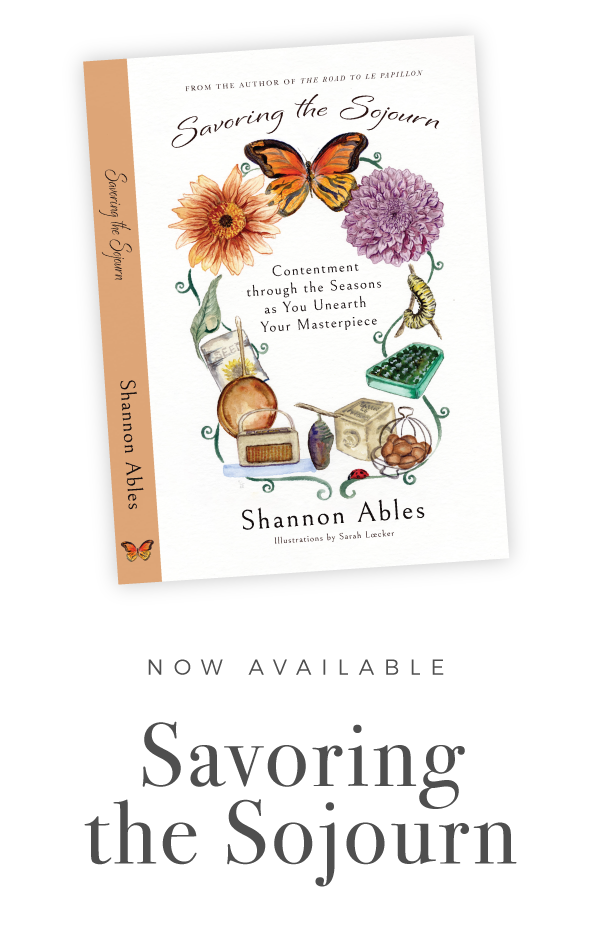
In my new book Savoring the Sojourn: Contentment through the Seasons as You Unearth Your Masterpiece, the entire book explores the two components to living a life we love and that brings us to life: remembering to consciously be present in our everydays, savoring them deeply, while knowing what we have set an intention to create and ever so gradually at the pace that is necessary for our journey, stepping toward it each day until we arrive.
Busch reminds us that “we thrive when we have both a North Star that gives a broader meaning as well as meaningful day-to-day interactions. We often need both the macro and the micro to thrive.”
8. Connect the dots for others
A beautiful maxim when it comes to serendipity is that there is a virtuous cycle that creates more serendipity for others as well as for us, and it by helping others, even when they don’t expect help or aid along their journey. Our objective is not to gain anything when we choose to help others, but rather to extend kindness and provide support when we are able to connect the dots, be the middle person of sorts, that without, they perhaps wouldn’t see as an option.
My mother has been a serendipity creator my entire life. She always has her ears open, not looking for anything in particular, but she has so many conversations with all sorts of people, when she hears about something that someone she knows would like (a class, an antique treasure, even a pup that needs a home – hello! That is how Oscar and Norman came into my life), she connects the dots and usually both persons had no idea this connector (my mother) was at work for them. This creates goodwill, and my mother has racked up a ton, and you can too. It’s not about doing it for direct gain for yourself, but rather putting good energy out into the world. When we receive such a gift from someone we will be inspired to offer that feeling to another person when the opportunity crosses our path.
So just as much as we want to keep our eyes open for serendipitous moments for our own journey, when we do the same for what we know those in our life would find helpful along their journey, serendipity multiplies. This, in turn, fosters gratitude, and it is a wonderful, nourishing cycle that affects not only us but many others.
9. Choose to take action and then do so! (and pack your patience)
“Vulnerability is often about showing up when you don’t know the outcome.”
A serendipity mindset requires that we become more comfortable with uncertainty, something we talked about in episode #429. Seizing serendipity involves being willing to attend to the unexpected, not just take note of it.
Let me be clear here about how serendipity occurs, or should I say, how quickly it can occur once we adopt the practices shared above, and all of them that are shared in Busch’s book: They won’t happen immediately.
We will have to adopt the mindset of finding ease with not knowing, but because we are trusting what is guiding us that lies within, then it is there that we find our peace, our equanimity as we explore in episode #428. Busch writes, “I have rarely encountered anyone who was lucky over the long run without being tenacious.”
By embracing the unexpected, which happens far more than we may have at first acknowledged, we are constantly opening our life and mind up to new ideas, possibilities, and opportunities. Ironically, when we choose not to embrace the unexpected, we are actually more vulnerable, not less. By avoiding the chance to explore the unexpected, we aren’t teaching ourselves how to dance with it. And the only way to ever dance well is to practice the steps. If we never practice dancing with the unexpected, then it will always be scary, and we will lose our balance and trip over our toes and stomp on others when what we really want is to learn the steps and eventually dance with ease and grace.
10. Become part of (or build) social networks that amplify serendipity
“Our culture—the collective values, beliefs, and principles that guide us and our interactions—can play a powerful role in either nurturing or constraining serendipity.”
Leave the agenda at home, and simply choose to engage and build relationships with people with whom you share interests and passions. It is important that we don’t have an ulterior motive for joining or creating a group, and this is where letting go needs to be put into practice. Let the group evolve as it will while also paying attention to the dynamics and making sure that it is a constructive place to exist, keeping in mind the quote above. “Over-engineering networking—or for that matter, serendipity—leads to the opposite effect.” We reduce the chances of serendipity by seeking it out directly. Rather, we need to create the conditions and let go.
This is a great place to conclude the list, and while there are many more specific ideas shared in Busch’s book The Serendipity Mindset, hopefully today’s post/episode provided an introduction to how to engage with life while also letting go and being open to all that may cross the path that you have chosen to be on.
The exciting news, the exciting truth that this book underscores, is that more serendipity is possible in our lives, and we hold the reins to making it possible with our mindset, our choice of activities and learning opportunities, and how we engage with others as well as care for ourselves.
In so many ways, the serendipity that we seek is trying to get our attention and get us to see it if only we would learn the skills, then apply them, to make it possible. Contentment resides at much of the this discovery process because when we are living a life of contentment we are fully present, and more moments of happiness are witnessed and savored, and so too are serendipitous moments.
Let the journey unfold and may we be wholly in the moment to savor all that it has to offer along the way.
SIMILAR POSTS/EPISODES YOU MIGHT ENJOY

How to Practice Trusting Intention in Our Everyday Life and Why This Leads to Our Dreams Coming True


~Learn more about TSLL’s Contentment Masterclass: view the detailed syllabus, watch the trailer and read student reviews.

Petit Plaisir
~Premiering on PBS Masterpiece on Sunday August 16th
~Read a detailed review and watch the trailer here.