Become a Member for as little as the price of a croissant and enjoy unlimited reading of TSLL blog. Add the cost of your favorite cuppa and enjoy ad-free reading site-wide, including all exclusive content.
That feeling when our shoulders drop naturally, we make decisions from a place of confidence rather than fear, we are at ease to be ourselves and surround ourselves with those who feel safe to be themselves. There is an unspoken respectfulness rather than resentment, an enjoyment of the company and life we have cultivated, and when momentary chaos jets into the day, we remain steady, trusting we will make it through to the other side where calm will return.
A secure feeling in our daily life can arrive or be reached in a few different ways. And mind you, we’re not talking financial security, we’re talking emotional attachment security. The feeling of being at ease with our own company as well as with those we connect with and interact with. To live a secure life as it pertains to attachments is to engage with the world from a place where our nervous system is regulated (i.e. relaxed) giving us the ability to confidently try new things, share our true selves, relax entirely, and savor completely.
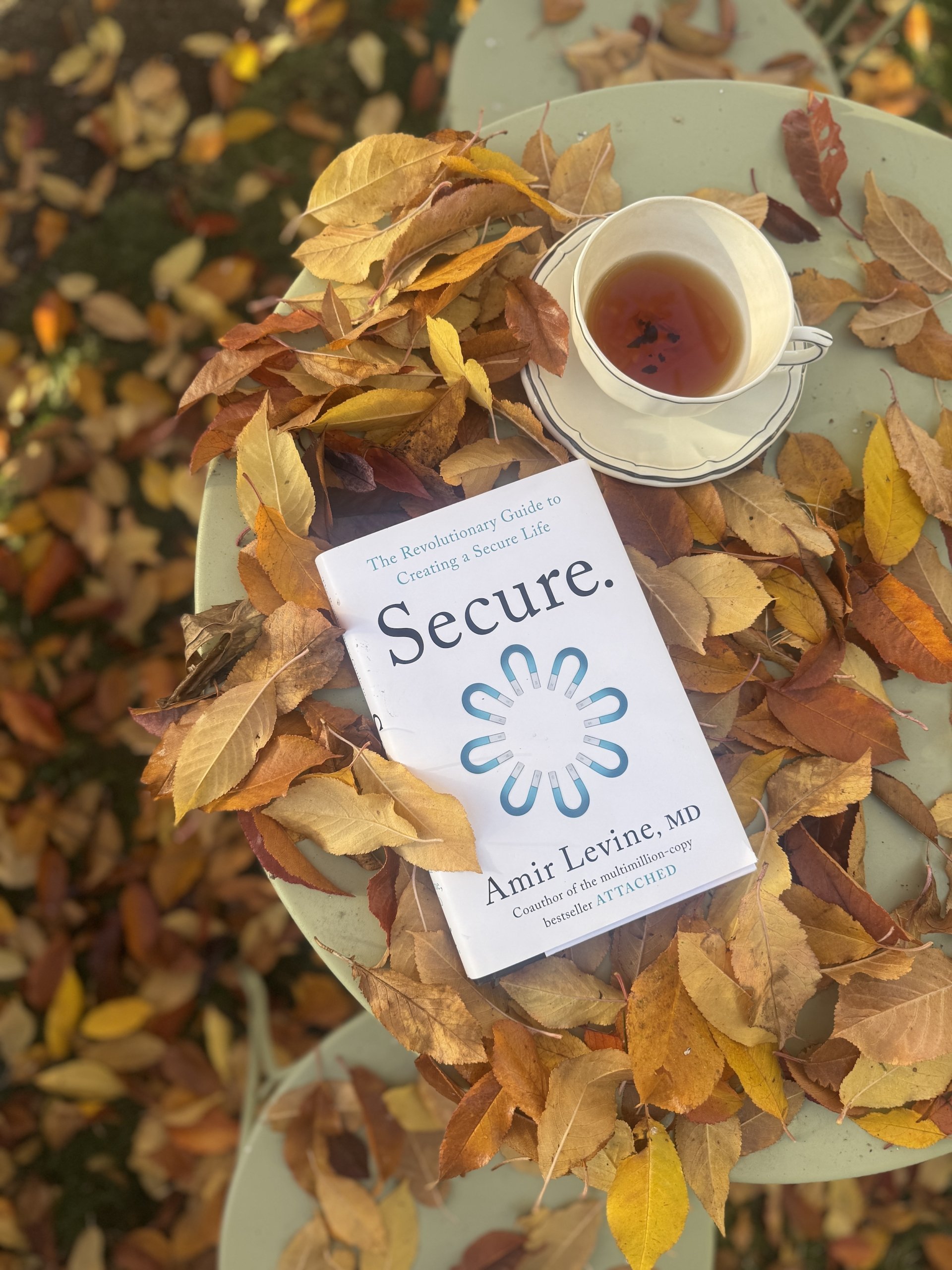
You may remember or have read Dr. Amir Levine’s bestselling book that he co-authored titled Attached (see below). It inspired an entire episode of The Simple Sophisticate podcast (#318), and while that book focused primarily on romantic relationships, in his new book Secure: The revolutionary guide to creating a secure life (released this past spring), he spread the net wider addressing how to be secure in all types of relationships and how to navigate when we are not a healthy place to be secure. In this way, the book is the resource I was delighted to come across recently as it validated and further taught how to be secure within oneself and in choosing and nurturing relationships to maintain a secure life.
episode #318: How to Become A Secure Adult in Relationships

I mentioned above that there are a variety of ways we can become a secure individual. One is that we were raised by secure adults. This includes our parents as well as anyone who we had consistent connection with throughout our childhood – grandparents, teachers, etc.. They modeled as well as consciously provided a secure environment where we felt safe to explore and thus relax and be ourselves. In such cases, whether we are what Levine speaks about in the book, an orchid (delicate and harder to raise, but capable of blooming beautifully when given the right conditions) or a dandelion (resilient and adaptable, able to grow just about anywhere), we lived a secure life and are able to step toward a life that brings us to life.
However, even if we weren’t raised by consistently secure adults, we can become secure, and that is why Levine wrote his book and created the Secure Theory (which the book teaches), and what we will explore in today’s episode/post. First, let’s take a look at what a secure relationship and secure person embodies and how they engage with the world:
What being secure in life and relationships means and looks like
The acronym Levine created is a helpful tool to return to as we begin to both seek out healthy relationships as well as be a secure person. The acronym CARRP stands for the following:
- Consistent (a regular rhythm. This brings comfort to all humans and animals, babies to adults, even to our pups and cats.)
- Available (as opposed to avoiding. “Accepting a personal commitment to stay connected and to take some responsibility for their emotional and physical well-being.”)
- Responsive (Depending upon your life schedule, you respond when you are able to as swiftly and consistently as you can. And the responsiveness is kind, loving, respectful. In other words, providing the energy you want in your life.)
- Reliable (The other person in the relationship with you feels that you are exhibiting the above three behaviors – consistent, available and responsive.)
- Predictable (Whatever your above three behaviors that have been determined to be secure are, you remain predictable in those behaviors without any erratic changes.)
I separated the top three from the bottom two because the division distinquishes between how other people respond to us, and the latter two how we engage with others and are perceived. We may be or want to be in a relationship (any type of relationship) with someone who is Consistent, Available and Responsive which means that they are Reliable and Predictable, but if we are not Reliable and Predictable in our engagement, the relationship is not balanced and we are not behaving in a secure way.
What I think is also important to note, the consistency isn’t going to be the same for each person we are in a relationship with. For our young children, we may be with them daily, throughout the day responding to their requests and needs, but with a friend, the consistency may be weekly or even monthly. With our parents, the consistency again may be very different depending on location of where each lives, the chapter of life each of us are living, etc. The important part is that whatever the Consistency, Availability and Responsiveness is (how much time it typically takes for them or us to respond), it is Reliable and Predictable. We can depend and know with ease of mind that within a certain window, this person will respond, this person is available, and this happens consistently each time we reach out.
When both people involved in the relationship (us and the other person) are engaging in this way – being reliable and predicatable in our consistency, availability and responsiveness, then we know we are a secure adult and they are as well.
So how do we get to that point? How do we with confidence choose or let go of relationships so that we are in secure relationships and are also a secure person? That’s what we’ll explore below. But first, the four attachment styles that were taught originally in the book Attached, but are again explained in Amir Levine’s new book Secure:
- Secure
- Anxious
- Avoidant
- Fearful Avoidant
One of the most helpful Ahas I had while reading this new book, Secure., is that we are often not consistently the same type of attachment style with every relationship (i.e. person) in our life. And this demonstrates that both people figure into the equation that effects the security or lack of security in the relationship. So for example, you may be a fairly secure person, but with say your boss, you become quite anxious. Upon further exploration into why that is, you discover that they are dismissive of your ideas consistently, which causes you to doubt your contributions. Or conversely, maybe you tend to be more avoidant, but with your romantic partner, you feel largely secure because they don’t invade your space when you need it, they aren’t constantly bugging you when you are apart during the day, and this gives you the independence you need without feeling you have to avoid them or their communication efforts.
Ultimately, our objective is to build secure relationships throughout the web of our lives, and once we ourselves are secure and understand how to remain secure, this becomes easier to do.
(Within the book Secure, Levine provides questionaires and X/Y grids to help you determine your attachment style, and find which style is more prominent with the primary people in your life. I talk more about this and share the grid in November’s A Cuppa Moments with Premier members.)
Now, let’s discover how to become a secure person in our life, and build secure relationships.
1. The power of Seemingly Insignificant Minor Interactions in everyday life
“What most people don’t realize is that our SIMIs, the ones that often escape our attention because we believe they are of little consequence, are actually of huge importance in the process of changing our brain and the life toward greater security.”
SIMIs. The other acronym that figures prominently in this book is a concept that will sound very familiar to readers of TSLL and the concept of living a life of true contentment.
When we intentionally both bring our attention to the present moment and then look for what is going well, what makes us smile what is making the day run smoothly, we are creating a helpful habit that builds a grounding sense of security.
Let’s take that step further, we not only look for these, but we choose to cultivate them. We choose to engage with loving-kindness with each person we cross paths with – acquaintances or intimate relationships. We choose to create rituals within our days, weeks and months that welcome into our lives activities and joys that elevate our everydays.
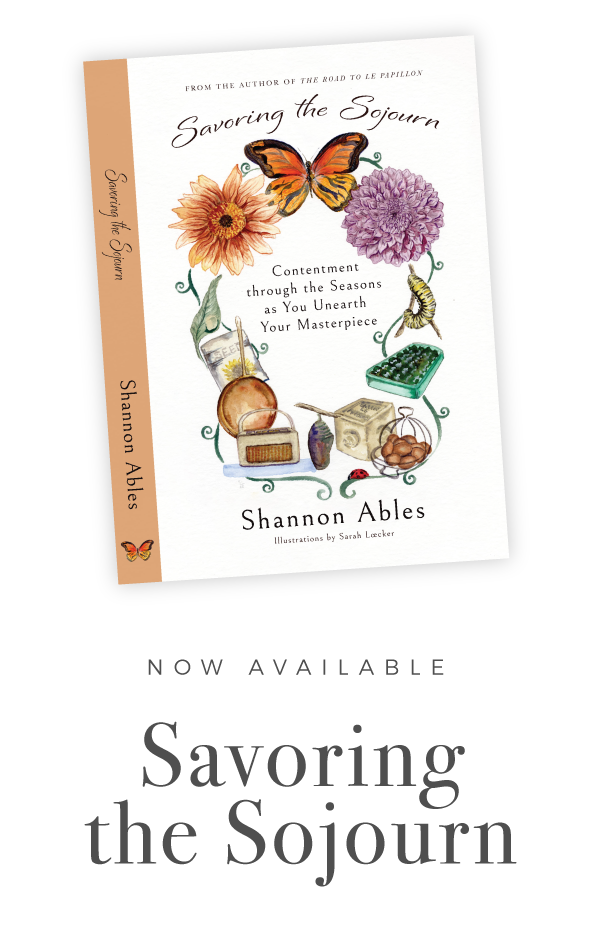
Something that is taught in detail in my new book Savoring the Sojourn is how to create rituals that support the life we love and how to distinquish between a ritual and a routine – both valuable to living a secure life.
When we consciously are investing our efforts in immersing ourselves in “prolonged periods of time in small but highly beneficial day-to-day interactions” our brain then begins to change. Prior to these changes our brain’s sensors for stress hormones were highly attuned, but with time (and that is key, we must be patient and consistent in our immersion of SIMIs throughout our days), the stress sensors become more relaxed and new synpases connections have been created in the brain that trust they will find reasons to relax, feel safe and not be on constant alert.
2. What we need to understand about the brain and blood flow when it comes to feeling secure
How does the brain change, you might be wondering? An important physicological truth, explained by Levine helped me to understand why feeling either anxious or avoidant makes it difficult to simply shift to feeling secure.
We’ve talked before about how willpower is finite and our energy is finite. And generally speaking this is because, “The brain has a limited energy budget.” It cannot increase blood flow to meet increasing demands. The brain doesn’t have this option. “The best your brain can do is divert a little energy from one area to another, keeping some areas more activated than others.”
When we understand the logistics behind why when we give our attention to protecting ourselves as we wind our mind up with worries and doubts and fears, it’s no wonder it cannot also feel relaxed and at ease.
“If the amygdala, the part of the brain that alerts you to potential danger, is activated more often, you will experience frequent bouts of worry, fear, and anxiety.”
We have to not only consciously begin to shift our mindset when unwanted moments arise, we have to learn the skills to create the conditions for unwanted moments to arise less frequently. This begins to teach the brain that it is safe, and then it begins to change, and the amygdala becomes less involved. Which leads me to #3.
3. An enriched environment is priceless and necessary, especially for orchids
“When you are surrounded by people you feel really good about, your brain switches to secure mode and spends less energy on defensive vigilance, freeing up resources to love, work, create, and flourish.”
As someone who identifies with being an orchid, I am grateful that my parents, especially and most directly my mother (as my father worked away from home most of my childhood, but he too provided a secure environment in his own way as he could) provided an enriching environment where I felt safe and therefore confident to explore my curiosities. I have shared in my books, that my brother and I are quite different in our social temperaments – he enjoying being with his friends and I enjoying my own company – Mother Nature and animals, along with a book, being my preferred company. My mother let me be me, and I will forever be grateful for that.
As I moved into adulthood, it took time to cultivate an environment that both honored my sensitive nature, but also gave me the calm so that I could be independent and confident to explore (or at the very least, discover what I needed and didn’t need or shouldn’t have in my life to flourish). TSLL blog came into being as I began this exploration and discovery of how to honor what nourished and piqued my curiosity. And I am beyond tickled to have found kindred souls who have become a part of TSLL community.
“Surrounding yourself with the right people can make or break the course of your life.”
In my own life, during my twenties, that was a difficult decade. I write about this in my first and third book in more detail, but ultimately, it was the time during which I recognized what was and what wasn’t enriching. Then it took time and conscious decision-making, knowing why I was making the decisions I was making (leaving certain relationships, stepping into different career decisions, starting a blog, spending more time with my creative self rather than doing what the typical person in their late twenties and thirties might do on the weekend in the community in which I lived), but it made all the difference. It was how I eventually created an enriched environment.
“You will become more secure with time, but it will occur gradually and you won’t be able to pinpoint exactly how, when, and where it happened. Instead, you have to keep at it—you have to develop a secure practice. And you can’t do it alone.”
Now it is an ongoing process of fine-tuning and being aware of what is working and understanding when it is not, but how we do that is what we will explore below in the following points. But first, Levine shares a few examples of how we begin to shift our daily activities to build more security.
- watch movies or read books with secure themes
- meet a trusted friend for lunch regularly
- call a secure loved one (parent, sibling, grandparent, godparent, etc.) regularly
4. A new perspective on boundaries and what it means when we need to set them
“In secure relationships, setting boundaries is rarely necessary. When two people are attuned to each other and form a secure collaboration, the right give-and-take just happens organically, behind the scenes.”
Lightbulb moment! I know we’ve talked a lot about boundaries here on the blog/podcast, but Levine writes in his book how he presents what some may see as a bit controversial, but nevertheless he has found it to be true in secure relationships: boundaries aren’t necessary between two secure adults.
The key component is that both adults are secure and consciously understand what that means. Not only do they respect the person they are in the relationship with (again, this can be any type of relationship), they also respect their own needs. While the balance is dynamic, weighing our needs with our loved one or colleague/boss, etc., we always keep ourselves in the equation, and nonviolent communication is how we learn about each other’s needs. (Nonviolent Communication is explored in Savoring the Sojourn and introduced here in this blog post).
If someone is not a secure adult, or at a particular time in their life, they are not engaging in a secure way, this is typically when we would set boundaries, but Levine suggests other approaches that takes much of the responsibility off our shoulders as it can be very stressful to set boundaries with people, especially when they don’t want to honor them anyway. Let’s take a look at those.
5. What to do instead of stressing about how to set boundaries
If you have been working on strengthening your ability to set boundaries, you know that it is emotionally taxing. It does become easier with time as we both increase the quality of relationships thereby reducing the need to place boundaries, as well as begin to see the benefits of having them, so we are more encouraged of their importance; however, it does put much more weight on our shoulders (the boundary setter), and that reduces our energy that we have to give to what we love doing and the life we love living. So I was relieved, I think that is the best way to describe my initial reaction to reading this section of the book, when I saw these two approaches.
First, when we recognize that someone we are in a relationship with is not exhibiting the CARRP behaviors, we first will try to communicate with them directly in conversation if we want to try to maintain the relationship. Levine calls this a CARRP intervention, and it looks something like this: Simply share the importance of the five components (of CARRP) and why they are important. Then express hope that they will respond in kind. From there it is their responsibility as you have communicated your needs. We cannot change, force or manipulate someone into behaving in a way toward us that works for us. We have to let go and see what they do, and then decide accordingly what would be best creating an enrichment environment of relationships.
So, what if after expressing our needs of engaging in secure behaviors they do not change? “You’ll need to turn down the volume on your interactions with them and put the relationship on the back burner so they don’t get priority in your life.” This gives you energy to give to those people who are CARRP people. And the longer you have been enriching your environment with such people, it becomes easier and less stressful to turn down the volumne on those who are non-CARRP people.
The two terms or approaches discussed in the book:
Appendix Removal — following recognizing a non-CARRP person, we disengage and immediately deprioritize it. He gives the name Appendix because while the appendix is sometimes removed in surgery before it has burst, it is an unnecessary organ that has the potential to cause far more devestating effects if left.
It is important to note that you aren’t cutting the cord entirely, you are simply not prioritizing the relationship. You don’t continue to have ongoing conversations after the initial intervention (if it is a relationship you would like to give a chance at improving). Levine points out that often, “simply trying to cut ties with someone—even if they hurt you or wronged you—can activate your attachment neurocircuitry and lead to an attachment backlash.” So instead, disengage and deprioritize.
Wall Tennis with Love—dialing down your engagement. Just as in a game of wall-tennis where only one player is engaged, we become the wall. We don’t initiate interactions, but when we cross paths with them we engage with our guiding life ethos – with loving-kindness, yet honoring our integrity, in this case that this is not a relationship that is a priority as they are a non-CARRP person. Gradually, these relationships ebb naturally.
~Be sure to tune in to the audio episode where everyday examples of these are shared.
6. How the skill of self-awareness can help us heal and become more secure
Real-time interventions have a powerful effect on “undoing insecure behaviors as they arise.” And it is with our self-awareness, noticing when our nervous system has been derailed from the polyvagal system (PNS to the SNS), that we can take a breath (many) before taking any actions that we may have reverted to in the past when our anxiety or avoidance fears got the best of us.
Levine shares a handful of what he calls ‘pitfalls’ that we can stop ourselves from falling into in real-time. Each time we catch ourselves, or stop ourselves, we begin to gradually build our more secure self. It will take time and repetition, but with time, we will become more secure and eventually stop defaulting to unhelpful reactions when an insecure habit may have in the past been our choice.
One of the things we can do is prioritize discovering our individual talents and stepping toward them. By embracing our talents, Levine writes that they can be “profoundly stabilizing. It builds self-esteem and creates a sense of inner congruence—a key component of secure functioning.”
All the more reason to find our dharma, to unearth the many masterpieces that reside within you that are waiting to be explored and shared, but indirectly, this begins to give the ingredients to build a secure life, to make decisions that lift you up rather than drain your energy, to choose people that you look forward to spending time, and a life you cannot wait to wake up to each day and live to its fullest.

I hope you have enjoyed today’s post/episode. While I have only touched on the components that introduce how to build a secure life in all arenas, throughout Dr. Amir Levine book there are oodles of resources, anecdotes and guilding principles of note (I particularly appreciated his teaching of the Five Stages of the Protest-Regret Cycle often experienced as someone who identifies as Anxious).
For me, it was a book that confirmed and reassured, but also gave me specific constructive tools for building healthy relationships while also making sure I am behaving in a way that is secure toward others in all of the many relationships throughout my life.
May your tomorrows be more secure and enjoyable to live than ever before. Bonne journée.
Secure. The Revoutionary Guide to Creating a Secure Life by Amir Levine, MD

~Mentioned in the audio version:
SIMILAR POSTS/EPISODES YOU MIGHT ENJOY


Petit Plaisir
Don’t Believe Everything You Think: Why Your Thinking Is The Beginning & End Of Suffering by Joseph Nguyen