Become a Member for as little as the price of a croissant and enjoy unlimited reading of TSLL blog. Add the cost of your favorite cuppa and enjoy ad-free reading site-wide, including all exclusive content.
“Sophistication is a perfect marriage between intelligence and simplicity, combined with supreme confidence.” —Rose Tarlow, interior designer, author of The Private House
A home that spontaneously prompts a deep exhale of relief and appreciation when we arrive. Four walls of our own that reflect what we need to unwind, put down any defenses or professional selves that we have needed to do our job. When we know we have such a place, no matter the size, but we know it is our own, our whole being can rest, can delight and can be free.
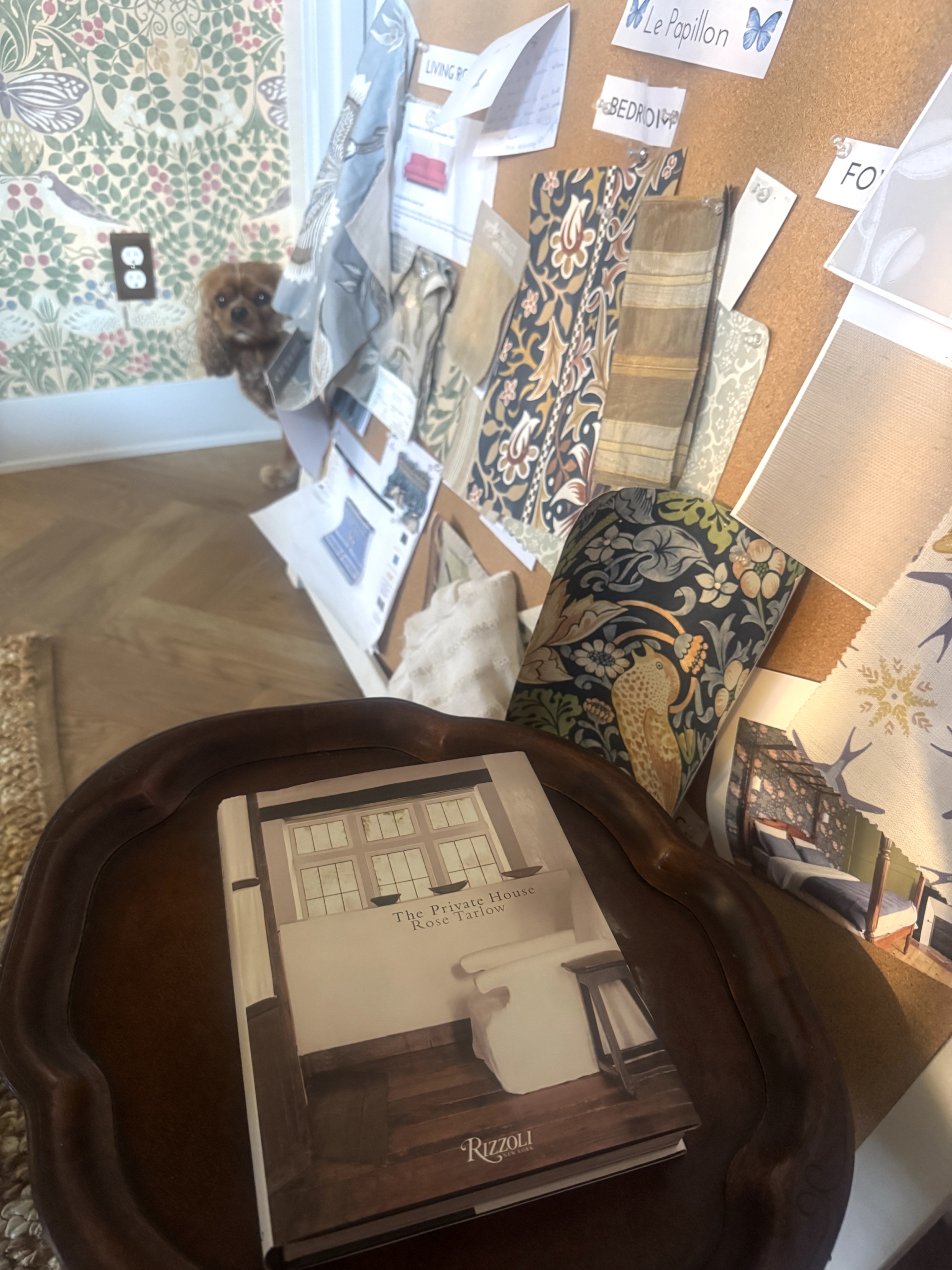
The caveat is that a home such as this doesn’t just magically come together. In fact, even hiring an interior designer won’t create this feeling of deep intimate calm that day after day, year after year, we feel innately. Rather, it takes intention, both in knowing ourselves and in knowing how to create the aesthetic combinations of colors, textiles, décor items, furniture and arrangement. The latter is what international respected interior designer, antiquarian and fine furniture and fabric creator Rose Tarlow can teach us. In her book The Private House published first back in 2001, she details, more accurately, journals her way through her thought process of decorating private homes for her clients, and herself and loved ones. The book was republished with updates in 2024, and I was fortunate to receive a copy after being inspired to explore the title by a long-time reader and member of TSLL community Deborah L. (thank you Deb!).
Rose Tarlow knows quiet luxury, even though she herself would never use the term. But to look at her projects of homes located in France (Provence), England (London) and in the States (Los Angeles), the fact that more than 20 years later they still look inviting, reveal her skill of timeless acquisitions, textile choices and arrangements.
Have a look at the quote below and her thoughts about the importance of creating, decorating a house so that it becomes our private house.
“Our private house should be a reflection of oursleves, our way of being in the world, what makes us distinctly different from one another. Taste is a matter of opinion and its nature is constantly seeking to define itself. So we are continually influenced by the people we meet, by what we read, and by what we see. Our opinions take shape, yet we are never fully formed, always becoming, incorporating experiences, continuously changing and refining our image of ourselves throughout our lives. This never-ending process of evolvement makes designing one’s own home an extremely personal experience.”
—Rose Tarlow, interior designer, author of The Private House
Along with knowing how to decorate, as mentioned above, we must also bring our self-knowledge, and this is an intentional journey we must embark upon, and a most enjoyable and worthwhile one as well. No only for decorating our home well, but making life and relationship decisions. TSLL blog, books and podcast have been dedicated to sharing with you resources and inspiration for unearthing and gaining the knowledge and skills you need to take this journey and with today’s post/episode, it’s all about decorating know-how: what works and why, how to decide and how to approach decorating your home when you have more than one room staring back at you waiting to be customized.
Let’s get started.
“Only you can accurately express your uniquely individual identity. You may choose from those personal sources of inspiration that interest and inspire you, and ultimately those choices will be what combine to create your private house.”
1. Choose colors with discernment and be patient in your deciding
“Color can be a powerful factor in any interior. In fact, it may be the most important design decision you can make.”
Not all paint colors are made the same. There are undertones of all different sorts as well as varying percentages of sheen, and how each amount or component will play well with or create tension or appear differently depending on the ‘neighbors’ that accompany the room where it is used will vary as well. Tarlow encourages to “spend time with a color, become preoccupied with it before making a commitment to live with it.” This gives you time to see the paint at different times of day, and even during different times of the year as the sun will shift, changing how much and at what angle the light enters the room.
“In any artistic endeavor, color has so much power that even as tiny a color spec as a ladybug can create a new picture. We are the painters of our own worlds, and nature is the most brilliant artist of all.”
2. Prioritize textures as much as colors and light
“When choosing fabrics, wall colors, wallpapers, or carpets, always be aware of the difference in texture . . . try to arrange all of your materials so you can study them together . . . Do these materials feel too much alike? . . . Add lots of contrasts, not necessarily in color but in quality and touch . . . Contrasts work off each other: stone and wood, straw and glass.”
Tarlow uses the example of a beige room. If it appears boring, she suggests that perhaps the artists — “anyone who is creating his or her own space” — may not have been able to create “visual and tactile vitality”. As she demonstrates in one of her own houses, a house that is awash in beige, yet the walls have texture, the furniture is a mixture of antiques and unique shapes and upholstery, nobody would call her house boring. What we instead need to pay attention to is “how to use form, proportion, and shape to define a room.” It is by paying attention to texture that “we add interest . . . Each textured element resonates in a different way, creating a symphony of contrasts, a kind of discord that adds vigor and inevitably creates a harmony that the eye and the soul can be at peace with.”
“You may choose to use one predominant color in a room, but it is in adding many different texture and surfaces that you will keep it from becoming tiresome.”
Learn How to Be Your Own Interior Designer with Rita Konig
Explore Rita Konig’s Create Academy course, and my takeaways here.

our her North Farm country home in County Durham.

3. Not all rooms have to have color (wallpaper or paint)
“In what are described as no-color rooms, the eye is drawn to the furnishings and objects rather than the room as a whole . . . if a room’s predominant color is white, off-white, or any light, neutral tone, then the art, furniture, and accessories will be highlighted.”
Finding a balance within your home between rooms of color (and by color, it need not be bright or a wildly eye-catching print in a wallpaper) and no-color rooms is something to keep in mind based on the mood you are trying to create both in each room themselves and the flow of energy from one room to the next.
In Le Papillon, I have consciously chose to wallpaper all the adjoining individual rooms (bedrooms, office, bathrooms, butler’s pantry and boot & basket room), but the main living area, which is open-plan has a neutral wall color (paint). This ensures that the three rooms (living, dining and kitchen) are cohesive, yet the individual items of art, upholstered furniture don’t become too busy for the eye. Three rooms of furniture and decor is a lot, and by keeping the walls neutral, the space doesn’t becoming overwhelming and each room can serve its desired purpose.
Paying attention to keeping this balance, you don’t have to have special pieces of furniture (antique, a grand stove, beloved framed art, etc.) in every room. You can choose the rooms where you want to showcase these special pieces and in the other rooms either not have as much or any, and let the color or wallpaper do the talking.
However, Tarlow is adament that ugly or unimportant furniture will not be disguised by a gorgeous wallpaper or brilliant paint job. The key again is intentionality. Not everything has to be antique nor expensive, but it must provide the function you need and at least be something you like.
4. Take it one room at a time, but pause when uncertainty arises, before returning to finish
Our home, if it is to be our private sanctuary, a space that gives us what we need to feel rejuvenated, at peace, as well as energize us and comfort us, will take time to decorate. And part of the joy of decorating for ourselves is the journey. We learn what works for us, we discover things along the way and during our life and travels, and we figure out how to incorporate these loves and what brings us joy into our spaces.
Focusing on one room at a time is helpful as it gives us clarity and reduces distraction.
For the most part, each room in Le Papillon (I am currently finishing the last room in the house – the guest bedroom) has been done in isolation until it was complete, but there were exceptions, and it’s important to know when to not push through to completion if you just don’t know what to do.
Often when we don’t know what to do, we may either discover that what we thought would work in one room actually will work best in another, and that is informative as well. This happened to me when I was laying the hardwoods in my foyer and butler’s pantry. I had an idea for a recessed coir mat, and at first was going to put it in one of the rooms, but because I was taking my time, I realized, it would be better in the other. Take the tour of each of these rooms here and here (seen below).


But back to focusing on one room. When we do this, and let ourselves live in the space while consciously considering how we want to feel in it, we narrow our attention down to seeking out what would work for this one room. It can feel overwhelming to look at an entire house that you want to redecorate and feel exhausted just thinking about the process, let alone the budget that it might all entail.
As many TSLL readeres/podcast listeners know, my journey of customizing Le Papillon began back in 2019 (see all of the completed projects here – more than 22!), and I am so glad I took my time. It allowed me to not compromise on quality, ensured I knew how the room best functioned for me, and where I could improve it, and with each project, I learned something that helped me either save money or reduce stress and make even better decisions in the next room project.
5. Symmetry provides harmony
“Symmetry brings harmony into our lives. [It] establishes balance and delivers an immediate sense of order and integrity to an architectural concept. It’s an important ingredient to the ultimate success of a beautiful space.”
While not everything must be symmetrical – side tables, table lamps, side chairs in the living room for example, it is the bones of the home – the windows and window treatments, the in-wall sconces or built-in bookshelves, items that provide the foundational structure of a room that when awareness is paid to their symmetry, the room feels more intentional. Then we can decorate and position the décor and furniture as we need and desire.
6. Place lighting at different levels to create a layered look
“The ultimate goal, as always, is to create balance and harmony; it is also important to approximate natural light as nearly as possible.”
Depending upon the purpose and function of the room, different wattages will be used, but when we remember that lighting can be placed at different heights, this too creates a layered effect that adds depth, warmth, and welcome. From the table lamps to the wall sconces and then to the ceiling lights. Drop the light down a bit from the ceiling by hanging pendant lighting, and yep, always remember the light streaming through the windows.
7. Mix old and contemporary pieces to bring life to your house
“The juxtaposition of contempoary pieces with antiques makes a room young and alive.”
The importance of contrasts continues to the furniture and décor as much as in the wallcoverings, paints, fabric and finishes we choose. From varying types of furniture – different eras, different ages, – when we remember to mix it up, but do so with intention, the guiding premise is comfort, functionality and what makes us feel at home.
8. Collections – what and how to choose
“Perhaps the most wonderful accessory comes in the form you now hold in your hands —a book.”
Book-lined walls, that too me immediately makes a room inviting, filled with life and a place I want to spend a great deal of time. Tarlow explains that bookshelves add depth to a room in ways that paintings and other wall hangings don’t. When it comes to collecting books, as well as any item we collect, “quality, not quantity, is what makes collections captivating.”
Our collections provide an intimate glimpse into our passions, our world, our life journey. They bring a charm to the room we situate them, and “they reflect the identity of the person who treasures them. Our prized possessions are keys to our personalities, and what interests us is usually the most interesting things about us.”
A rule that Tarlow follows when choosing what objects is that it must be precious to her. Anything we solely add to complete a room or for effect will ring hollow, especially to us, the home’s inhabitants. We miss out on the opportunity to provide a priceless feeling of richness when we purchase, place or adorn our homes with anything that is for others or to create a certain look dictated by a trend.
When it comes to building your library of books, choose and keep only books on subjects you care about. So don’t fall prey to buying ‘old books’ of no importance, but only for their aesthetics on a shelf. It will reveal lack of curiosity and someone who does not know themselves. I had to chuckle when Tarlow wrote, “It is disappointing to discover that the books have never been opened, or that they are on subjects that seem totally outside the owner’s interests.”
So, let your curiosity, your passions and what book titles you reach for again and again earn the place on your bookshelves. This is your library, this is your home, your private space of sanctuary.
9. Bedrooms and guest bedrooms – answer one question and it will tell you if it is an intimate, inviting space
“The ultimate question for any bedroom or guest bedroom is: Would you be happy holed up in this room for a week with another person?”
Plain and simple, create a room where you feel most relaxed, at peace and will be able to feel cocooned and decompress in order to sleep well. This requires that we bring our creativity and personality to the essential ingredients all bedrooms have: a bed and linens, nighstands, a comfortable chair (or two), and if possible (enough space) a writing table and a cabinet (armoir or dresser). Add additional details as they would make you feel most comfortable. Don’t forget the window treatments to both ensure the level of darkness you need, but also complete the room aesthetic you desire. Bring your essence to this space.
Even in a guest bedroom, adhere to the details above. Spend a night or weekend in the room to see how it feels. Since the bed frame and mattress were recently purchased for my own guest bedroom, I have been spending a few nights in this space before I proceed with the remaining purchases. I want to make sure I know how it feels in this space, what would make it most peaceful, yet functional for someone’s needs.
10. Let go of perfection, but do your homework and plan with clear intentions
“Perfection can be boring, but ignorance is rarely bliss.”
Whether the perfection presents itself by following a particular room we saw on Pinterest to a “T”, or abiding by the rules of a specific décor trend, or maybe ensuring everything comes from a certain collection, décor era or is always in identical pairs, when we do this, our home loses any hint of personality, the personality, the essence of us, the inhabitants.
We do want to have a plan, we can be inspired by trends, designers, eras in décor, etc., but it is how we bring all of our curiosities, self-knowledge of needs and passions, as well as the home itself and what its spaces and design allows, that help us create a truly intimate house.
In Conclusion
Sophistication involves intention and attention
“Sophistication is a perfect marriage between intelligence and simplicity, combined with supreme confidence. A sophisticated room is simple in form and line. Its quality and elegance are subtle and self-assured. When a piece of furniture, a painting, or an accessory is put in a room with the intention of creating a special or eccentric effect, what you end up with is an affection, which jolts instead of pleases. Eccentricity in design is unique and special only when it comes from within you . . . always for the right reasons.”
The inclusion of the final descriptor of sophistication is one that takes time, but with intention and persistence into what we are trying to learn, we will gain it. Confidence. Confidence in our decor choices.
While it would be wonderful to be able to snap our fingers and instantaneously change our entire house into the beautifully curated home we are envisioning, and likely can’t quite envision just yet, it isn’t realistic. Perhaps in decorating our homes, much like caring for a garden and tending to it each year, watching it mature and eventually coming into its own years down the road, our homes are much the same. Perhaps not as long in time as a garden, but they do take time.
However, here is the good news that I want to share and what I have experienced in customizing Le Papillon, a project of my entire home that began with the first room’s completion in January 2020 (I began planning and exploring in 2019 shortly after purchasing my house in August 2019). Once you have a vision, your planning board, your chosen aesthetics and purposes for each room, then it’s just a matter of budget, scheduling with contractors as necessary and then finding the items you need or that you discover and know will work. We can’t rush this process, but in planning and having clarity, we know it will eventually come together.
Having just rounded the corner into my seventh year of customizing and having only one room left, and it is halfway done, I now look around me and know I could not have done it any more quickly, but I am sure glad I made the investment when I realized the right choices for each room. May this peace of mind be yours as well when you give your attention to the objective of creating your private home, a home that is yours and those you love uniquely.
“A room with its owner’s personality indeliby stamped on it will always be fascinating because it is the story of who that person is.”
Now, to the vision and planning board! What fun discoveries await! And be sure to explore all of TSLL’s Home Tours (more than 22!) where I detail every decision, detailing my objectives, show oodles of photos (before & after), and source everything.

SIMILAR POSTS/EPISODES YOU MIGHT ENJOY
episode #361: 33 Decorating & Construction Lessons I Learned Customizing Le Papillon (a 3+ year journey)


Petit Plaisir

Watch the trailer


Shannon,
You’re welcome! I loved hearing your reflection on the book and Rose Tarlow’s approach. She’s really special!