Become a Member for as little as the price of a croissant and enjoy unlimited reading of TSLL blog. Add the cost of your favorite cuppa and enjoy ad-free reading site-wide, including all exclusive content.
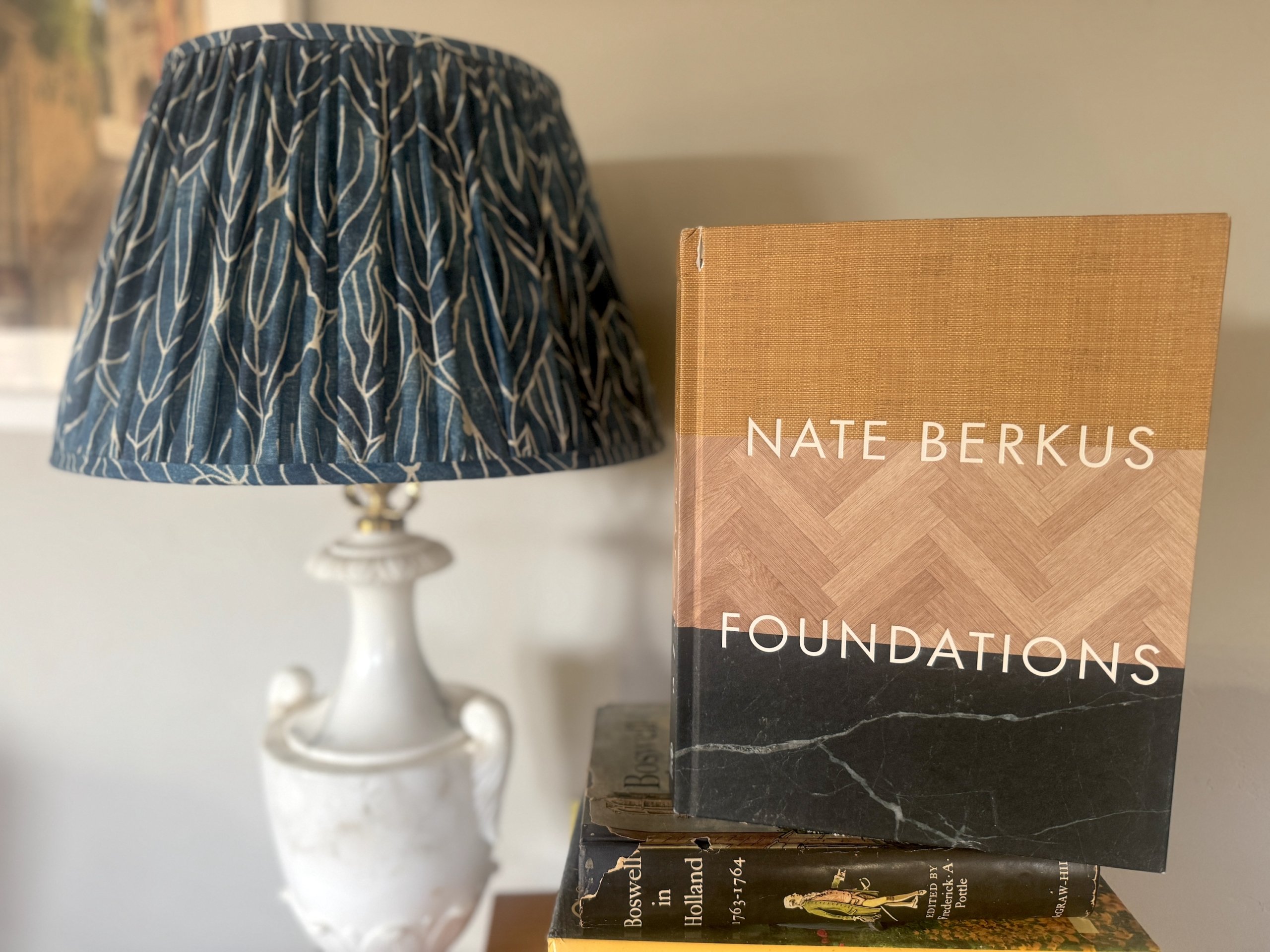
“My Four Tenets of Good Design are not rules to follow, as much as they are a framework to help you think about design, not just as something pretty to look at but as something that inspires you to be the best version of yourself in the moments when no one is watching.” —Nate Berkus, Foundations
A feeling of immediate release of any tension, letting the day wash away, and a trust that the comforts and reminders of love and bounty of a beautiful life lived surround you is what a thoughtfully decorated sanctuary gives us each time we cross the threshold.
The truth is a sanctuary can be found anywhere, and in fact doesn’t need to be a place, but as we talked about in Monday’s Motivational post, can be people or even ineffable things – concepts, ideas where we rest our mind. However, most definitely, our home can be a sanctuary, and today, we’re going to explore 7 ways to transform your home into just that.
Because a home isn’t always a sanctuary. It may have four walls that keep us warm and shelter us, but the definition of a sanctuary is that it is a reliable place of refuge to rejuvenate ourselves. As defined in Buddha’s Brain, a book written by Rick Hanson and the inspiration behind episode #327, a sanctuary is anyone or anything that provides reliable protection, so that you can let down your guard and gather strength and wisdom.”
So with that definition in mind, when American interior designer Nate Berkus’ new book, Foundations, was released this past November, I found a helpful companion resource to help each of us identify what would make our home a sanctuary and where to start the journey of gradually decorating a nest that feels far more than just a home, but most definitely a sanctuary.
The guiding premise of Foundations is Berkus’ four tenets of good design: make it personal, embrace history, introduce character, and develop your vision. These will guide us through today’s episode/post. Let’s begin exploring how to lay the foundation of our decorating journey so that as we progress, adding pieces, making decisions along the way, we have clarity and trust what we choose.
1. Let two self-truths guide you
When it comes to choosing the items to include in your home décor, be transparent and brave by knowing, then expressing (or including) the answers to these two questions: where you’ve been that you treasure and where you wish to go and become. Then find meaningful ways to include these memories and dreams into your home. It might, and likely will take time to find or decide on these pieces, but it will definitely be worth it.
2. Inspiration is everywhere, “Train your eye to notice what it responds to”
The fourth tenet Berkus teaches is ‘Develop your Vision’.
And this is something that takes time, but with intention, we can quickly identify where we feel at ease, what calms us or what ratchets up our stress and creates tension. Honoring this personal response will guide each of us toward certain aesthetics. Don’t dismiss this as trivial. It is not.
Wherever you go, not just inside others’ homes, but also museums or gazing at interior designers’ portfolios online or any spotlighted projects they have done in magazines or in articles, what catches your eye? Take note. Also, where you stay on vacation – hotels, vacation rentals, or a spa you visit, a restaurant that feels especially inviting, keep track of the colors, textures, fixtures, all of the details. You are building a personal catalogue that will make it simpler to narrow down searches when you begin to decorate your home.
When the time comes and if you choose to work with an artisan or a contractor, the more images and specifics you have, the better. We each come with different experiences and memories of what an ‘arch’ is, or what ‘warmth’ in a color means to us, so depend on images to clarify concretely what you are looking for.
3. Repurpose as much as you can, but know when to stop
As you begin the renovation process on any room, pay attention to what you can keep and either change the color or stain, change the shape or the counter top or door handles, but keep the woodwork. Maybe an old window becomes a décor feature in another room or hallway. Maybe something on the exterior that cannot function as it once did becomes a piece of sculpted detail inside.
Have fun being creative, but also know when enough repurposing has been reached. To the former point, in both of my bathrooms during my remodeling of them in 2021-22, we kept the vanities, and changed the color – one was painted and the other was restained. In the primary bathroom, we removed a third of the vanity as I didn’t need two sinks, and keep the drawers and door to the remaining cupboard. This saved quite a bit of money and I still achieved the look I had envisioned. Similarly, in my kitchen renovation, we kept the cabinetry, removing one wall of it to place the stove and range hood, and then had it repainted. Again, a huge money saver and the desired look was achieved.
4. Invest in the following pieces
Sofa, lighting, case goods – built-ins (bookshelves, consoles, cabinetry, custom work – closets, etc.), flooring, antique pieces, wall coverings, custom drapery (especially in the bedrooms), bedside lamps or sconces, bedside tables, dining table, interesting dining room chairs, kitchen appliances, hardware, countertops (kitchen), range hood, plumbing fixtures, bathroom fixtures.
~I talk more about many of these in the audio version, so be sure to tune in to learn more about why these items are worth investing in.
5. How to add charm
Charm is in the eye of the beholder, and how it is going to be created in your home will be determined by the answers to the questions we began our conversation with in point #1.
However, there are some blanket truths about charm: It will involve mixing in older pieces – older than you – with newer pieces. Repurposed or reclaimed, salvaged pieces will be part of this collage of layers of treasures that create the charm effect. What you reclaim, salvage, or repurpose depends upon what your home needs, so in that way, it becomes bespoke, thus personal and thoughtfully chosen. All of this adds to the charm.
We’ll talk more further down on our list about historic styles, but being sensitive to the history in your home, if you have historic elements that simply need more care and updating for modern use, is an opportunity to add charm. By not asking the house to be what it never was, and honoring its uniqueness, charm becomes abundant, and it is up to us to dance with it.
6. Add character to your home
Similar to charm is adding character, something that Berkus explores in detail throughout the book. As long-time readers and listeners of this show and podcast know, brocantes in France and antique and vintage shops in Britain are must-visit places when I travel to either country, and these shopping excursions are wonderful places to pick up pieces that will add character to your home. Both an expression of your personality and your life journey as experienced through your travels.
Oh! And don’t forget inherited pieces. Making sure that the piece holds a memory you want to keep in your home, these pieces are priceless in their own way at character that cannot be purchased.
Explore all sorts of items from pottery, vintage candlesticks, gilded mirrors, and don’t forget the rugs!
Have fun exploring and deciding what you will bring home, but also know you can do this in your own backyard at garage sales, consignment, and antique shops in your hometown. Or shop online consignment and antique shops such as 1stDibs and Charish, where many furniture finds were discovered for Le Papillon – my desk in my office, an old vintage French bamboo find that I still pinch myself that I found during the pandemic, a marble lamp base that simply needed me to take it to a light repair shop to add a harp and lengthen the electric cord. While it took a year to find a lampshade (one worth the wait as Robert Kime’s artisans made a beautiful silk-lined piece that now sits atop a $100 steal of a find for the base), I am tickled beyond to have welcomed that find into my home.
And that’s just it, have fun with this process. Don’t feel rushed. Let your interests, your life, and thus your eye guide you. Over time, you will have a home full of character that becomes the sanctuary you had hoped to create. Because you absolutely can.
7. Understand historic styles, mix and match thoughtfully, but definitely mix and match
“In order to create an interior that feels layered and assembled and individual, one that breaks the barrier of uncertainty, it should include many different styles, and a mix of old and new. The only connection that needs to exist between one object and the next is that you like it.”
Over a six-page section, Berkus defines and gives examples of the ten different historical styles of décor, beginning with where most historians recognize that antique furniture began – in the sixteenth century. This part of the book is helpful to teach exactly what these terms mean, as we will come across them in our treasure-hunting excursions.
We start with Neoclassical, then move to Louis XVI (16th), on to French Provincial, Swedish, Primitive, Art Deco, Modernism, 1930s-1940s European, Mid-Century Modern, and finally 1970s European. Within each, he shares the items’ origins, key details to look for, designers from that era, and where you can see these styles in architecture today. Study this section to gain insight into what draws your eye. And with this knowledge, you can become more focused on what to search for that you love and would like to add to your home.
The journey of creating our sanctuary is quite similar to our own life journey, remembering to delight in the traveling, in the discovering, finding peace along the way even when we haven’t found exactly what we are looking for, is just as important as the completed project.
And while our sanctuary will continue to evolve and be tweaked as we change, grow, and perhaps even move and bring our treasures with us, knowing what makes our sanctuary so is time well-invested. For our well-being, for our loved-ones well-being and for deepening our love of living whether we are at home or out in the world.
Petit Plaisir
~Click here to read the review and watch the trailer.

To advertise on this podcast please email: ad-sales@libsyn.com
Or go to: https://advertising.libsyn.com/thesimplesophisticate



I really enjoyed this episode. I love your content on interior decor, Shannon. It was your blog and podcast that introduced me to the concept of my home as my sanctuary and that changed how I approached my interior design. It led to a love of curating it in a much more intentional way. I’ve not watched all your reveal videos (I do intend to) but what I have seen
I thought was absolutely extraordinary. The change you created in Le Papillon, seeing the before and after of your kitchen! I thought it was utterly amazing. I had no idea that originally it had been quite an ordinary-looking contemporary space. What a vision to turn it into something beautiful like you have, and so characterful. I know I have access to the other videos and I will savour them in due course. Brava! Krys x
Krys, you are very kind to say all that you have about the journey Le Papillon has gone through to be what it is. There truly is so much nourishment to be enjoyed and received from our homes. Thank you for sharing all that you have. I know that it takes time to curate the space that nourishes us best, and I even I have in the past wanted things to materialize quickly; however, what I have discovered is that the time and patience we give our sanctuary, as it gradually comes together offers a much more true to us and long-loved space that truly is a sanctuary. The rushing leads to corners cut that eventually deteriorate and leave us having to or wanting to do it again. Enjoy the journey of wishing you much nourishment in your sanctuary. ??