Become a Member for as little as $4/mo and enjoy unlimited reading of TSLL blog.
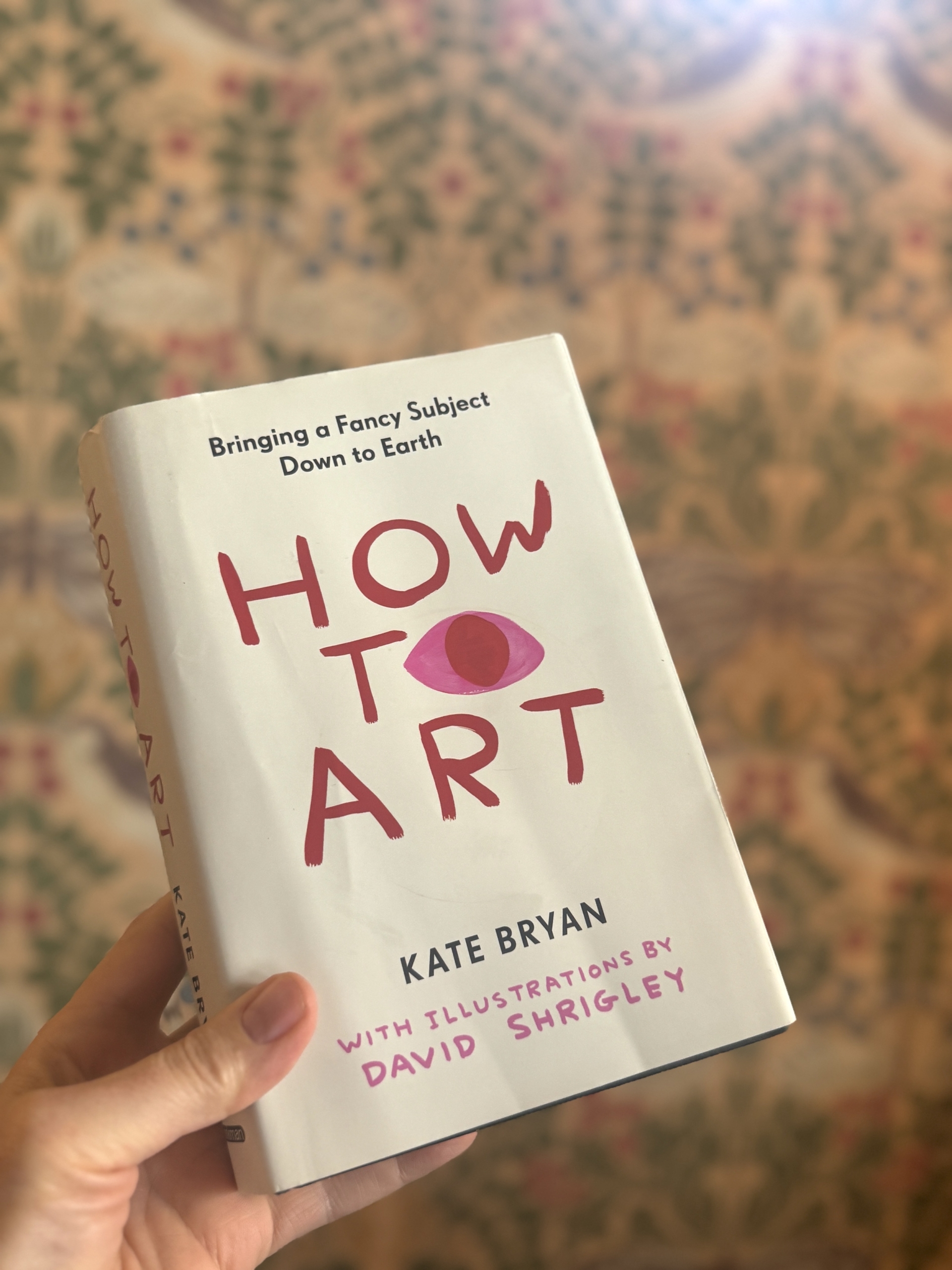
“Art is a language without words.” —Kate Bryan, author of How to Art: Bringing a Fancy Subject Down to Earth
The neophyte art lover that I am learned a valuable lesson about acquiring art and building a collection during a vacation to Provence back in 2018. On the other side of the square where my vacation rental was located in Vaison-la-Romaine, the open doors of an artist’s studio beckoned. Filled with landscapes and seascapes by the artist Karibou, this stone-walled studio displayed art that drew my eye like a magnet. However, I didn’t appreciate this unique availability nor discovery until years later.
Since that trip, I have become more intentional about what I welcome into my home, hang on the walls, and decorate with throughout my home. Never having a large (or even medium) budget for artwork, I still always placed on my itinerary during travel, time to visit museums and special exhibits that caught my interest or piqued my curiosity.
But why art? Why bring it into our lives? Why spend our hard-earned money on it? We often hear about the skyrocketing headline-making prices of paintings being sold at auction, but what’s the point of purchasing something if the entire reason is to accrue value to sell later?
The primary objective, Bryan shares, in writing this book, is to remove the assumed ‘closed doors’ or air of snobbery about art that she admits the art world itself has constructed. But, and she makes a strong argument, art, seeing it, appreciating it, making it, is part of being human. And to cordon it off, to claim that it is only a pastime for those with oodles of money or interest to acquire art of the upper echelons is preposterous.
You may be wondering, Why is Shannon talking about this subject? What does art have to do with living simply luxuriously? With living a life of true contentment?
It is precisely because true contentment is grounded in presence, seeing, clearing, and appreciating the everyday that the choice to bring art into our homes helps us savor each and every moment even more. When we bring works of art into our homes, we bring in a moment in the artist’s life as they saw it. Their capturing of this ordinary moment in time, however they depict it, is a reminder that there is “beauty and marvels in the everyday”. Even if we cannot or do not want to even try to be a literal artist, by gazing at their art, having it be present in our daily lives, we are continually reminded to see the gift in each day – to consciously look for it, take note of it without taking it for granted, and to savor it.
Bryan underscores vehemently that we cannot and should not like all art. To misunderstand this, to like all art because it is art, is an ignorance of art’s purpose and its value. Much like a concerto or a book that receives positive reviews from some while being abhorrent to the ears of others, that variation in responses is what makes it art and what reveals its power to prompt a response, whatever that response might be.
Art comes in many mediums and is available at a wide range of price points. Fine art, what we are talking about today is a piece of work that is an “original, usually by living artists and not mass produced”.
Today, I would like to encourage you to consider, if you haven’t already, acquiring an art collection to display in your home. Of course, how and where you display it, most likely throughout your home, will be up to you. Conveying your tastes, interests, and values in what each work depicts reflects a collector who engages with life in the present and brings their self-knowledge and quiet confidence to what captures their eye.
At first glance, as mentioned above, this may sound like a frivolous idea, even financially unsavvy, but as I hope to demonstrate in the first list below, there are numerous life elevating benefits to welcoming art into our daily lives. Let’s take a look.
What real art, fine art, brings into our lives
“Living with art is a privilege, but it also is a fundamental human exercise.”
1. A stabilizing sense of peace and stillness
When we place a piece of art in our home, much like a sofa, it is dependably there through all of the days of our lives, the entire calendar year, night and day. What differentiates a sofa from a piece of art is its function. We don’t use a piece of art to do anything – relax, support our back, etc., but instead to give us something should we choose to take notice of its gift.
Capturing a moment, frozen in time, when we gaze at it, having chosen it for a nourishing reason, we are taken to that moment, reminded of the feelings that it evokes, and hold ourselves in the present moment as we rest our eyes to view it. Art slows us down, anchoring us in the now. While our recollections take us to the past momentariy, we bring that memory to the present as inspiration to lift us well into our everyday where we find ourselves. Perhaps we then remember how far we have come, what we have learned, what love has been in our lives and what love we still have to give. It is almost as if we are refueling, energizing ourselves and reminding ourselves of our capabilities, of all that we have been given and done and still can do.
2. A deepening appreciation over time
The ability to keep returning to a piece of art, looking at it again and again through different moods and chapters of life, is unique to the art we bring home versus the art hanging in a museum. This frequent viewing opportunity gives us the chance to view it through our evolving perspective on life in general and on specific life experiences. During joyful times in our lives, we may observe and respond differently than during fiercely painful moments. The same piece of art can prompt different thoughts, ideas, comforts, and smiles. And because of these experiences with the art, it becomes an inhabitant of our home, enriching our daily experience.
3. Improve our mood, quickens recovery from illness
When we look at art, we look into a different world. Depending upon what we chose based on the feelings it evokes within us, that feeling is brought into our daily world when we see the art in our home. No matter what has taken place outside of our sanctuary, when we step inside and gaze upon the artwork, that feeling is available for us to absorb.
All the more reason to choose thoughtfully, yet trust our instincts when it comes to the art that we add to our collection.
4. Clarify a sense of self
“The point is to unlock the stuff that’s already inside us.”
Our sanctuary begins to form a personality of sorts as we make choices about decoration, color, fabrics, and light. And so it only makes sense that the art we choose says something about us as well. Not only what we value, but who we were, are, and wish to become. Because we have selected the art we placed in our home, it says something to us and thus reveals something about us. Perhaps our journey thus far, where we’ve been, or where and how we feel calm, what is nourishing, what is soothing.
By choosing to display this art, when we gaze upon it, we remind ourselves of our truth because sometimes life has a way of making this self-knowledge cloudy. Art helps us return to ourselves.
5. Cultivate a nourishing sanctuary
Similarly to #4, our art can provide the reassurance, the comfort and the clarity when the world beyond our door disrupts our rhythm, confidence or sense of security. While so many of the details of our home create our sanctuary, art plays a significant role in its materialization of it being a sanctuary.
6. Financial investment and and how we can support of the world of art and its artists
As mentioned above, art has the potential to accrue value over time; however, for a true collector, having the art, viewing it regularly, and being in its presence daily are the reasons we purchase it. Should we sell it or pass it along in our will, we know there is financial value, but that is not the primary motivator. We purchase art because we understand its importance in the world at large. When we purchase art, we support the artist who is making it so that more art can be created, and the cycle continues. Long-term, yes, financial value may be present, but that is secondary. Art collecting supports the art world, conveying the message that we need art to be reminded of our humanness.
7. The time capsule of our life journey
I love this concept of our art collection becoming a time capsule. A diary of sorts in which the collector themselves is the only one able to translate what each piece shares about their life journey. This makes it all the more sacred and worth investing in, even if gradually and for nominal cost. We are keeping a record of our life, what we saw, experienced, what changed us, inspired us, lifted us, each chapter portrayed through works by other people, the artist themselves, who will never know the role they played in elevating another person’s life experience. But that too is why we support artists – that enhance the quality of the lives of people they will never meet, and what extaordinary gift to give.
How to Welcome and Enjoy Art in Our Sanctuary
“Ultimately, we have to free ourselves from the tyranny of ‘getting it right’ . . . for those of us not looking to be a master art tastemaker, getting your eye in is about learning to trust your instincts around art.”
1. Always remember that it is your eye
“Acquiring art is a highly personal and often emotive enterprise, and one that should be savoured without fear of judgment.”
As individuals, and art being unique in and of itself, “the effect that art has upon us can never be universal”.
2. Spend time around art to hone your taste
By consciously choosing to both visit and observe art, as well as notice it as we go through our daily lives – the sculpture in the park, the mural on the building – reflect on your thoughts and feelings when you gaze upon it. What do you like about it? What turns you off? By simply paying attention to how you respond to art when you see it, you begin to trust what speaks to you and why, and build a confidence to then purchase and welcome into your home when something grabs your adoration.
This also includes making time to visit exhibits, museums, as well as popping into artists’ studio when open by chance as you are strolling down the street. Slow down, look around you, and you will begin to deepen your consciousness about what type of art speaks to you, nourishes you, conveys to something that is impossible to put into words. When we give art the chance to speak to us, our appreciation deepens for the artist and their vision, even if we don’t know what inspired them to create it. As is the case with all art, once it is out in the world, we can never know how others will respond; what is within the artist’s control is what they create and what they give to it.
Ask yourself the following questions, as suggested by Bryan, for considering any new piece of art you come across
- How did they make it?
- The most objective and easy to determine – “What is the piece made of?” Watercolors, oil paints, marble, bronze, acrylic, clay, pastels, photography.
- What is the style?
- How did the artist use the material – the brushstrokes, the type of paint, the type of material to construct the creation, what is portrayed?
- What is the technique?
- “How was it made?” What type of brushstrokes – unfinished, heavy, smooth, finessed. What type of technique?
- What does the artwork say to you?
- There are many opinions about when a piece of art is truly finished. Some make the case that it isn’t finished until the viewer lays their eyes upon it and give it their interpretation, which, as we have talked about above, will be varied and unique to the eye of the viewer.
3. The components of a collection that you will cherish
Kate Bryan shares that in her experience, “the best collections are passionately assembled, esoteric, and maybe even a bit odd.” At the heart of any collection that is loved by its collector is passion, appreciation of its beauty and the feelings evoked whenever we lay our eyes upon it. Tune in to your visceral response to the works of art that you are considering. Trust that instinct. Often we cannot describe the depth of our connection with a piece, but we know it lights something up within us that feels nourishing.
What I know about myself is that being near the ocean nourishes me. Acquiring this self-knowledge from many trips to the Oregon coast with my pups, each visit upon returning home leaves me calm, clarity is found, and I am rejuvenated. What I saw in Karibou’s paintings of the Atlantic, off the coast of France, was the opportunity to always have the ocean with me. Each time I laid eyes on her seascapes, composed only of waves and crests, sky, and a skiff of land, my heart rate slowed, my exhale became audible. But I thought it was too extravagant to find a way to purchase. Who did I think I was to purchase such art? I have yet to buy one of her paintings, and since then, as all worthwhile art does, it has increased in value. Which is why I was grateful to Kate Bryan for writing her book – it validated what I felt, the importance of having such a piece in my daily life, and that I wasn’t ‘out of my mind’ for wanting to have it in my sanctuary. The feeling was real and not evanescent. I trust that truth now, and hopefully, in the future, an original Karibou seascape will hang in Le Papillon. At least now, I know it will add further comfort, tranquility, and joy to my days.
“Art is for everybody. It is an inherent part of human culture the world over, and has been for thousands of years. Art takes us just as we are. It values our individual opinions and emotional responses, and can offer healing, solace, inspiration, exhilaration, and reassurance. Art is yours for the taking, so please, go and take it on your own terms.”
Enjoy the process and treasure hunting as you curate your own personal art collection.
Purchase and explore Kate Bryan’s book How to Art here.

SIMILAR POSTS YOU MIGHT ENJOY


Visiting Foire de Chatou: Antiquités, Brocante & Galerie d’Art in March (and how to take the train from Paris, photos included!)

L’Art du Crime, French series, petit plaisir #269

Petit Plaisir
French Film, 2009
~Read my review and watch the trailer here.

To advertise on this podcast please email: ad-sales@libsyn.com
Or go to: https://advertising.libsyn.com/thesimplesophisticate


Great piece, Shannon. I started collecting a few years ago and never regretted it. I pick up pieces here and there… Whatever speaks to me in the moment.
I could really relate to the words “art… becomes an inhabitant of our home”. So true. There is a connection there, internal and yet external. As if the artist knows how to speak your language and becomes part of your circle.
There are so many great Christmas markets this time of year. It’s a wonderful opportunity to check out local artists and maybe bring something special home. A gift to youself.
Cheers.
Jen,
Thank you very much for sharing your experience with collecting art for your home. I think once we realize how it truly fills our lives and isn’t just ‘stuff’ hanging on a wall, we realize the gift we give to ourselves and everyday moving forward. Thank you also for the suggestion and reminder about Christmas markets. 🙂
For being a static object, art really has a soul that when we purchase it because of its connection with us, it becomes far more than any static object could be. Thank you again for your comment. 🙂
I wholeheartedly agree with your take on art as a nurturing source
for building our sanctuary. I have collected for 30 years. I’m at a point where I’m ready to part with some art and reframe other pieces to refresh their presence. If ever you buy an original from an artist, make sure to ask for a “Certificate of Authenticity.” I bought a treasure 25 years ago and only recently reached out to the artist for this document. She was so happy to oblige and drew a beautiful “certificate” for me. Her artwork now appears at Arte Basil and in NYC so this truly meant a lot as I want my kids to know this piece is worth something. More than anything it’s worth a million to me simply because I love it so much.
Diana,
Thank you for sharing your experience as well as this advice for all of us to keep in mind. 🙂 Tickled you enjoyed this episode! 🙂 Sounds like you have a beloved collection.
Great episode, Shannon. I might have to get the book. I have been collecting art for 25 years and can’t imagine my home without the paintings I have collected. The art that you choose to bring into your sanctuary speaks to your soul, and it is truly nourishing. My own paintings now adorn a few walls in my home and they make me feel so happy each time I walk past them. ?
Karen! I have been meaning to respond to your comment, and I do apologize for the delay. Your having collected art with intention for 25 years and being an artist yourself, sharing all that you have is further validating of the powerful and nourishment art provides in our daily lives. Thank you for sharing this truth.
I am tickled that you now include your own work in your home, and I wanted to share that in the book, Kate Bryan has an entire (quite lengthy) section dedicated to those who choose to be actual artists. While I am not the traditional artist that she speaks of, it was fascinating to read her suggestions and ideas. She certainly both knows the art world and what it takes to be an artist who loves what they do. I think you would enjoy the book. It isn’t dense, and will be a quick read even though it is thick, but it is dense in the sense that she includes so many ideas – concrete, actionable and helpful.
Thank you for the encouragement as well to trust that yes, the art that speaks to us, if we can, bringing it home will be a good idea, a very good idea indeed. 🙂
What a gift this post is, Shannon. I have seen the book, considered it, but didn’t pic it up. Now my curiosity has been piqued. I have a rather diverse collection of water and oils, original pieces, greatly valuable mostly to me. My passion is antique and new pottery. A local artist, recently passed, had joked that my collection of his work was larger than his. Since then, I have been able to procure several pieces from his private collection. His daughter knew he would want me to have them. Three pieces, unusual modern interpretations of French chickens, are always a bit of a surprise to friends. They are not my normal style. As soon as I greet Le Roi in my dining room, my day gets brighter. They are an acquired taste, they are Phil in style and personality, I miss him. This example just illustrates that art is what you choose, what brings joy and peace to you, as well as memories of a place or a person. Thank you for this post.
Lucy,
Thank you for sharing the joy the art in your home brings to you, and also let me extend my condolences for your artist’s passing. To have his daughter want you to have some of his personal art collection speaks to how much you respected and supported him. It sounds like you have a wonderful collection and thank you for demonstrating the comfort and joy our collection can bring us. I am smiling reading your comment when you describe your chicken artwork and I don’t even know what they look like! 🙂
Ha! I have always wanted to raise chickens, but with our coyote issue, it isn’t reasonable. I need to take some pictures and put them on Instagram, I will add that to my to-do list. Besides Le Roi (we call him Percy) we have his sisters, Henny Penny (he even carved “The Sky is Falling” on her,) and Pippa. I think we need to expand our day-to-day activities when we start naming the pottery, right?
Not at all Lucy! I name all sorts of things in my home that nourish or care for me and those I love – my stove, my car, my trees in the garden, even the stool I brought back from England! It shows awareness and appreciation. Keep on naming those chickens! 🙂