Become a Member for as little as $4/mo and enjoy unlimited reading of TSLL blog.
“We might think that security is everything. But to secure something is to bind it. To keep it still. In contrast, in embracing uncertainty, we discover an ever-changing freedom and flow.” —Andy Puddicombe
An unexpected event. From startling good news that seems to come out of the blue or devastating loss, these events and anything in between that occur outside of what we imagine or have forgotten could happen or believed wouldn’t happen for some time, provide a powerful medicine to bring out a deeply fulfilling life.
These events that shake us awake to the reality that we cannot know how life will unfold from day to day are what American psychiatrist Irvin Yalom describes as ‘awakening experiences’. And this awakening is an awesome opportunity, should we choose to see it as such.
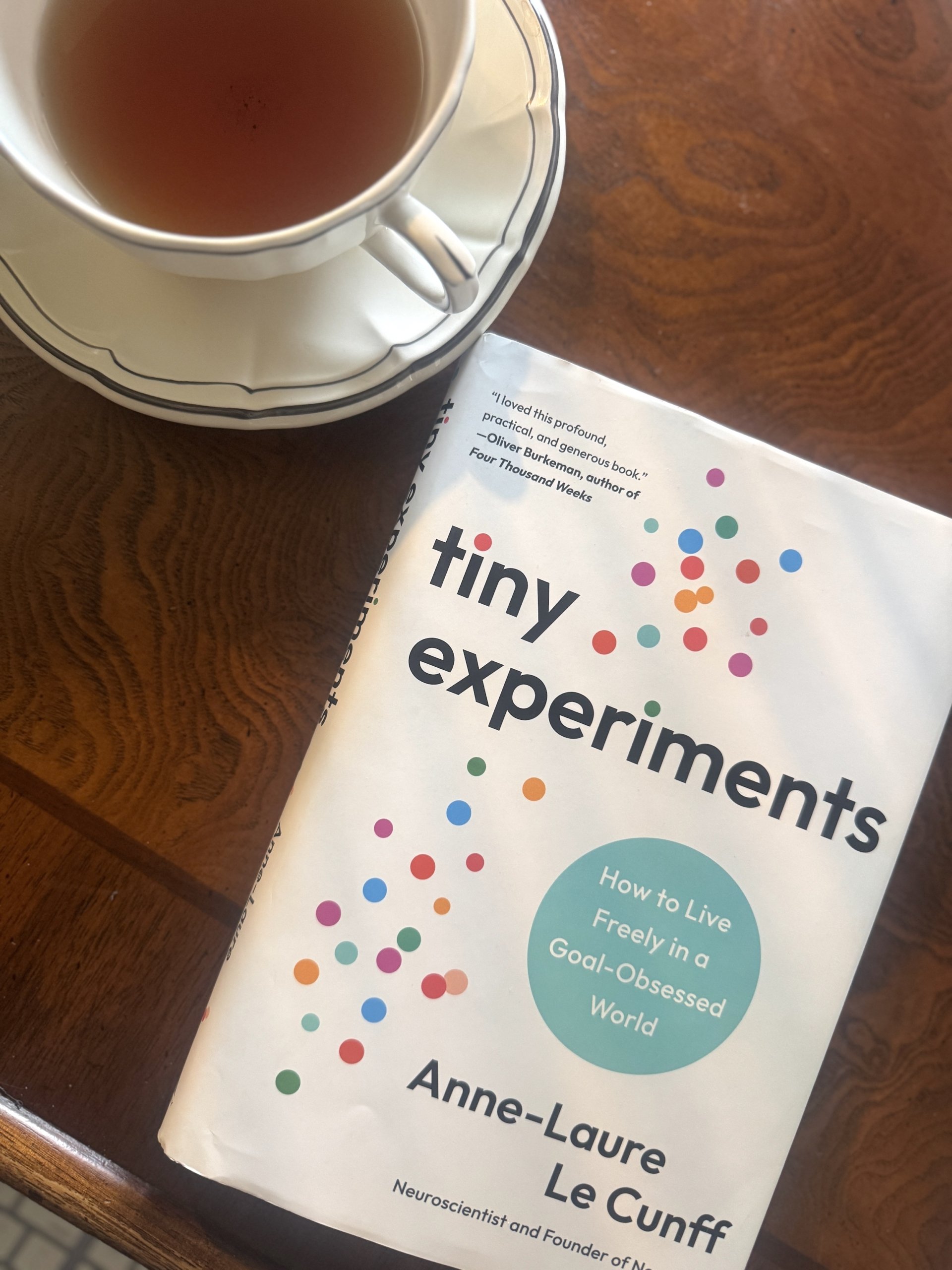
“Uncertainty has so much to teach us.” —Anne-Laure Le Cunff, author of Tiny Experiments: How to Live Freely in a Goal-Obsessed World
As a neuroscientist, entrepreneur, and now author, Anne-Laure Le Cunff shares how embracing uncertainty is ironically the “antidote to burnout and boredom alike—a counterforce to the fear, overwhelm, confusion, and loneliness”, many people she knows and observes “try to apply old notions of success to the world we’re living in today.”
Paired with befriending our curiosity, practicing mindfulness in our work around our approach to productivity, and keeping an open mind, when we welcome all four into our daily approach to live, that is when our life begins to sing – in the daily rhythm that deepens our contentment and in the outcome of wherever we have set our intentions to extend towards.
“When you lean into your curiosity, uncertainty can be a state of expanded possibility, a space for metamorphosis. It’s a way to turn challenges into triggers for self-discovery and doubt into a source of opportunity.” —Anne-Laure Le Cunff
How to Rest in Uncertainty
1.Resist setting goals, and instead create intentions
By setting goals, we set out to achieve something, rather than learn or discover anything. That may sound drastic, but look at it from this perspective that Le Cunff describes. When we seek to be hired by a new employer, we are trying to convince them that we know something, demonstrating the expertise we already have. Because of this, we are striving to “provide answers based on our expertise—not questions based on our curiosity. We begin caring about what people think of us and we project an image of confidence . . . we welcome anything that provides the perception of control.” In other words, “this common shift from boundless curiosity to narrow determination is at the heart of why the traditional approach to goals keeps on letting us down; it impedes our creativity and prevents us from seeing and seizing new opportunities.”
The good news about making this shift is that it actually sets us free to be who we always have been. To return to the curious child with an unquenching curiosity for how life works and the wonders of the world around us. Goals limit our possibilities; intentions broaden the possibilities of all that can be discovered along our journey.
Yet another irony is that by clinging to goal-setting, we are causing more fear to swirl into our life. By becoming so focused on a particular outcome that must occur for us to feel successful, the journey along the way is not savored. Something we talk about in the Contentment Masterclass is the reality that if we focus on the goal, we are focused on the future. We cannot be present if we wait until the goal is achieved to feel the feeling we wish to feel.
Still more unhelpful and contradictory outcomes of living a life of contentment, as setting goals creates, is that doing so “breeds competition and isolation.” Because when we dive deep enough into the root or genesis of where our goal sprang from, Le Cunff argues that they aren’t even entirely our own; “we borrow them from peers, celebrities, and what we imagine society expects of us. French philosopher René Girard called this phenomenon mimetic desire: we desire something because we see others desiring it.” And while there will be highs experienced along the road toward our goal, there will also be lows, and this is where goal setting is different from creating intentions.
When we create intentions, we hold ourselves in the present and enjoy each day along the way. The highs and lows may come, but we aren’t burdened or swayed by them. We remain steady, observing what crosses our path, and knowing ourselves, choose which next step would be best as we near our intention. We do not have a timeline, so the stress is lifted. Instead, we have clarity about how we wish to live right now. And as it aligns with our sincere engagement with life, our courage to be vulnerable rather than expect what should happen, beautiful things unfold, large and small, and all are treasured.
To reach the intention that we have imagined provides an interesting experience for journeyperson because while that day is appreciated, we acknowledge that it is a day, just like all of the other days that we have lived fully. And we have peace in how we traveled, how we arrived and how we will live tomorrow.
2. Let curiosity be your guide
“Success is the lifelong experiment of discovering what makes you feel most alive.” —Anne-Laure Le Cunff
To rest in curiosity, we invite possibility into our lives, and, because we are present, we now have the ability to see the possibilities when they cross our path.
This sounds simple, you may be saying, but it’s hard to rest without knowing. We have become so trained to think we can know how so much will unfold if we plan it step by step, that we lose the gifts that are available to deepen our experience and genuinely align with what speaks to us.
Le Cunff shares that these three ‘-isms’ that psychologists have identified are the mind’s default settings if our mind is untrained to understand why uncertainty unsettles us so. When the unknown presents itself, especially in the form of a stressful experience, the sympathetic nervous system kicks into gear and either tries to flee or fight, or at the very extreme, freeze. These reactions (not responses, as that would be the result of exercising a trained mind and holding our nervous system in the parasympathetic system) appear in the form of Cynicism, Escapism, and Perfectionism. Each of these are merely “shields we raise in the face of uncertainty.” But we can shift away from these reactions simply by finding peace in resting in curiosity.
When we shift away from the three ‘isms’, and instead shift toward curiosity and embracing the unknown, we open up our lives to growth, self-discovery, and all that makes life exciting.
3. Stop clinging to the need to find your purpose
“When we fixate on finding one singular purpose, we rule out the side quests that help us grow the most.”
Having a purpose has many similarities to pursuing a goal. We are clinging, we narrow our focus, which limits possibilities and the depth of our life experience, and we have an expectation, sometimes unconscious and often rooted in others’ definition of the reason for that purpose. We will often hold on to our found purpose out of fear, again unconsciously or consciously, only each of us will know this. We accept a script as to how our purpose unfolds – come up with a business idea, open a business, grow the business, sell the business, etc., etc., etc. This is not an original script, but so many people will follow it, thinking it exemplifies success and is their unique purpose. When we do this, our imagination is limited, and our possibilities shrink.
To continue with the example of owning a business, such a feat is applaudable, but Le Cunff implores us each to ask the question when it comes to any purpose we are pursuing, “You might live a dream life, but whose dream is it?”
Along the way of letting go of purpose, you realize that you have many purposes, and you didn’t actively have to label them as such. When you follow your curiosity, your true self is set free, and you are paying attention to what brings you to life and what brings you a steady ease of living in each day. Each of these knowledge points comes down to the next point.
4. Know thyself – take the course of You
Quite a few times here on TSLL we have mentioned a Commonplace Journal. Simply a journal to record ideas, thoughts, quotes, finds, anything that you discover as you move through your day that lights you up, piques your curiosity and delights you. This is not a diary, but more akin to anthropological study of you of what you enjoy about your life and the world around you.
Le Cunff suggests tracking three specific things throughout your days to gain clarity about what brings you joy and what drains you: energy shifts, mood (how do you feel after different events throughout the day), and encounters (noting any insights or feelings that were experienced as a result). What you are providing yourself with is the ability to see patterns.
When we start to observe our daily life to better understand ourselves, even taking note of what is absent and either is missing and needs to be added or has been deleted intentionally and with good results in our days, we begin to build a confidence that we will know how to meet possibilities when they cross our path. What to explore further, what to say yes to, and what to politely decline or tweak.
5. Focus more on how you are living rather than what you are doing
“It’s a simple idea, that making the most of our time isn’t about doing more, but about being more: more present, more engaged, and more attuned to the quality of our experiences.”
Shift away from doing more which includes letting go of multi-tasking. Shift away from needing to feel completion and shift toward how you engage with the day and each moment. This doesn’t mean you won’t produce, complete, or tend to necessary tasks, but it allows you to be more present in how you live and, thus, how what you do makes you feel.
For example, there are seasonal changes regarding natural light. Because of the amount of light, we may feel more or less energized. Similarly, monthly hormonal cycles affect our mood, our energy and pain threshold along with many others depending upon our individual physical being. To ignore what we need is to reduce our ability to function well, engage thoughtfully and tap into our creativity.
6. Understand the pillars of a fulfilling life
With all that we have talked about so far, and even more that Le Cunff explores in her book, everything rests within one of the three pillars of what we need to live a fulfilling life. Those pillars are Energy, Executive Function, and Emotions.
When we understand how each of these functions for us individually, we can make the best decisions to live a life of quality.
Let’s explore each of these a bit more closely:
- Energy: In point #4, we spoke about becoming an anthropologist of yourself. Observing when and how your energy ebbs throughout the day based on each circumstance. Applying our observations with Emotional Intelligence (EQ), something explored in-depth in my second book – Living The Simply Luxurious Life, you now have the keys to the road map to navigate (make decisions) to improve your energy so that you can be fully present for yourself and others.
- Executive Function: In point #5, we talked about letting go of multi-tasking alongside tending to the ‘how’ rather than the ‘what’. In other words, focus on engaging with whatever you are doing fully to bring about a quality experience rather than a quantitative outcome.
- Emotions: Points 1, 2, and 3 spoke to understanding how fear guides us more than we may admit or, most likely, even realize. Knowledge of how our Nervous System works, something taught in-depth in TSLL’s Contentment Masterclass, paired with Emotional Intelligence, as mentioned above when discussing Energy, we begin to recognize patterns, and with applied courage, we begin to make different or better decisions to start to live a life that brings us to life. We also learn skills about how to calm our emotions and to regulate our nervous system. When we apply these skills, we take the wheel from our emotions yet still see them, experiencing them in a healthy way without clinging or reacting.
7. Practice decision framing
“The only failure is to confuse mindless movement with mindful momentum. As long as you keep on adapting, learning, and growing, you are winning.”
That pros and cons list – reconsider relying on it to make that big decision you have in front of you. It’s not that its entirely unhelpful, but it Le Conff argues that it is hollow – too logic-based. When we understand ourselves, we know what we personally need and what our desires are – what truly fulfills us, something that often is unquantifiable on a list of logical good and bad points.
Instead, apply “decision framing”. This will “widen your cone of uncertainty, and explicitly take into account not only external signals but also internal ones.” This ‘framing’ welcomes into the decision-making process intentional curiosity so that your life decisions honor what fuel you, what lights you up, what brings you ease uniquely.
External Signals: this is primarily the logical side of the examination — “facts, context, practical limitations” (finances, time, space, etc.)
Internal Signals: details personal and only known with clarity to you, the person who has done their anthropological homework of themselves — emotions, motivations, self-nourishment, what growth areas you seek in your life.
And here is the great news to hold in your mind as you consider which decision you will make: It’s not about what is the ‘right choice’. It’s about stepping fully toward that choice, knowing why you are making it, with a clear mind that has included your inner compass and self-knowledge in the decision-making process. More good news: “It’s almost impossible to fail when you see everything as an experiment . . . It’s a path you walk to discover more about yourself and the world.”
“Remember that you are the lead scientist of your life. There is no universal formula. You are unique and nothing about your future is fixed. Whether you are twenty or seventy, you can move in any direction your curiosity leads.”
This life, each of our lives, will be filled with uncertainty, but Andy Puddicombe reminds that when we accept this truth about uncertainty, there is no longer fear. Why? “Because we have already embraced that everything is changing all of the time.” And that, that has ALWAYS been the case. The difference now is that finally, we are acknowledging its veracity. In so doing, we set ourselves free to explore, letting go of the unnecessary tension we brought into our lives by trying to control everything and this new approach in how we live brings about a sense of ease in both our mind and in our daily life. Because we, after doing our personal homework, can trust ourselves along the way to know how to navigate as we move forward one step at a time.
Petit Plaisir
~The Count of Monte Cristo, PBS Masterpiece
Read my review and watch the trailer here.