Become a Member for as little as the price of a croissant and enjoy unlimited reading of TSLL blog. Add the cost of your favorite cuppa and enjoy ad-free reading site-wide, including all exclusive content.
“It turns out that if you optimize the performance of a car and of an airplane, they are very far away in terms of mechanical features. So you can make a flying car. But they are not very good planes, and they are not very good cars.”
— Gregory Benford, science fiction author and astrophysicist, emeritus professor at the University of California, Irvine
Back in France in the 1930s, an entomologist and a mathematician applied incorrect logic (seeming to be logical at the time) to come to the conclusion that bees should not be able to fly. Having to do with the physical design of the bee (not having enough surface area), their wings would not be able to create enough lift for their heavy bodies, but the duo didn’t realize something. They didn’t realize that a bee’s wings don’t move like a bird’s and aren’t stiff like an airplane. They didn’t know what they were assessing, so their assessment couldn’t have possibly been accurate.
Numbers and knowledge of our body’s vital signs are helpful and informative to a point, just as making sure the measurements of a home’s construction for the walls to meet each other for a sound foundation, and the proper materials for structural security of the foundation are crucial, but then we need to remember to live.
The push for constant productivity and longevity to the extent that we ignore the present moment, is when optimizing becomes incongruent with living simply luxuriously. The constant pressure to improve, finesse, perfect, keep up, and stay on trend pulls us ever further away from the life that will actually fulfill us.
We each have a unique journey to live, to travel, to experience, to savor. The key is knowing what to dive deeply into doing, and what is actually distracting from the life we say we want to live.
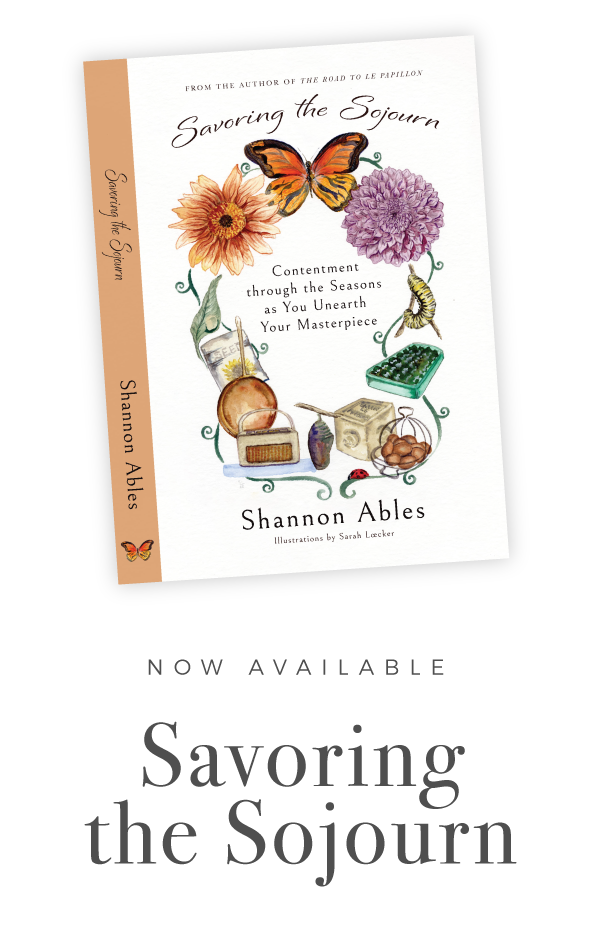
Explore TSLL’s latest book – Savoring the Sojourn, and discover seasonal inspiration for savoring each season as well as the journey to each of your many masterpieces.

The trouble with optimization formulas and approaches is that while we may all be human, we each have unique talents, gifts, and strengths. Combined with our own dreams, life experience and cultural background, this creates a recipe for each of us to align with a unique path moving forward. We also have our own genetic make-up, and have lived various lifestyles up until this point.
The heart of optimizing, largely, comes from a place of good intentions when it has to do with our lives (we’re not talking about business optimization, as that depends on the priorities of the business model). So, let’s take a quick look at why we might choose or be interested in optimization:
What motivates us to want to optimize any one or many parts of our lives?
- Consciously:
- to improve our lives
- to be more productive
- to make better use of our time
- Unconsciously:
- to feel in control of something when so much may feel out of our control
- to not have to feel or explore an uncomfortable feeling – i.e. avoidance
Anytime we are running away from something or trying to control something that is not our right nor within our ability to control, whether we consciously know we are doing it for those reasons or not, we stand in our own way of attaining the growth, the progress, the change we say we want. In this way, optimization becomes a crutch that we lean on to avoid doing the hard work that will take more time, but in the end give us the lasting positive change we hoped to one day experience.
Let’s take a look at eight ways we can shift our approach to optimizing that will ensure we are living a life of true contentment, a simply luxurious life.
What to Optimize for a Simply Luxurious Life
1. Optimize your enjoyment of staying physically fit. Instead of tracking every step or any other measurement our on-body tech devices offer, choose physical activities (either the community of people who take part with you, the environment – studio or outdoor environment) that inspire you to move and be momentarily challenged. Let working out become something that you look forward to because of not only the results that will eventually come, but the energy, community, and beauty that surround you. It may, and likely will take more time to achieve your results, but they will be more long-lasting because you will want to keep incorporating the activities in your regular routine.
2. Optimize for kindness to become a default response. Instead of focusing solely on how we can improve ourselves, shift to how we can cultivate a life that encourages kindness by default. This includes being kind to ourselves while also including those we connect with throughout our days – chosen or not. Living a life of contentment, a simply luxurious life, means letting go of all that we cannot control, but what we can control is how we engage with the world. It means being courageous enough to heal what needs our attention so that we are no longer defensive, cynical, or misdirect our pain onto others.
Through our thoughts, words, and actions, if we govern each with the guideline of engaging with kindness, we ensure we put constructive energy back into the world and also into our own being (thoughts become what we seek out and eventually find, so remember to think kind thoughts). Being kind is a practice in letting go. It’s an act of trust in ourselves, life’s possibilities, and the world, that the energy we extend without expectation, will inspire similar goodwill in the world, and we cannot help but be a recipient of that positive energy in some shape or form.
3. Optimize self-acceptance and self-love through patient dedication. Instead of embracing anything that ends in “-maxxing” (i.e., looksmaxxing, fibermaxxing, sleepmaxxing, even nothingmaxxing), shift to caring for your entire self, and not just how you appear on the outside (looks, clothing, etc.). Buddhism refers to it as Right Choice in which decisions are guided by wisdom, mindfulness and compassion, and it pertains to every arena of our life. Often described as skillful choices, what it refers to is making decisions that avoid suffering, confusion, and harm.
The Heart of Buddha’s Teaching by Thich Nhat Hanh
The book that walks you through the Noble Eightfold Path, which includes Right Choice (mentioned above). This book also dispels many misunderstandings about what Buddhism is and is not. For example, the author reminds us that incorrectly, suffering was assumed to be inevitable, but that is fundamentally contradictory to what Buddhism is dedicated to teaching. Buddhism’s aim is to eliminate or reduce suffering because it is what we cause and bring upon ourselves, and thus it can be avoided.

For our purposes of shifting from focusing and investing so heavily on our external projected visual self, choose to eat and drink wisely (not depriving, not extreme diet management), learn how your body functions and honor it with nutritious food, feed your mind well, and with time, you will feel at peace within your body and mind, and become appreciative of all that it affords you. Often, in our rush to appear improved to the outside world, we prevent the actual long-term outcome we hoped to achieve, which is usually to feel at peace and calm within our own being, and that goes deeper than just what appears on the surface. This is when a quiet confidence becomes a part of how we walk through our days, connecting sincerely with the world while honoring ourselves too.
4. Optimize emotional intelligence and self-respect. Instead of rituals that involve no emotional enjoyment or bypass your feelings altogether and involve feeling punished or being temporarily in pain, choose small challenges that you can stick with consistently over time. And in time—yes, not immediately—you will see long-lasting, positive changes.
There is a fine line between challenging ourselves and punishing ourselves, and each of us will draw the line in a different spot. But if we persist in punishing behaviors and see such behaviors as the only means to the end we wish to achieve, we disrespect ourselves and remove the enjoyment of living in our everydays. Such behavior may lead to burnout, to injury or illness, and it certainly isn’t helping us trust that we can take care of ourselves in the here and now in a loving way. It’s as if we are saying how we are living, who we are in this moment, isn’t enough, that we have done something wrong, and so by choosing punishing behavior, which could be any number of things (rigorous hours, little sleep, even ice baths, neuro-enhancement by way of supplements for cognitive alertness, endless biomarker tracking, etc.), we are trying to discourage ourselves from doing whatever it is we did in the past. But this doesn’t work in the long term because it destroys the joy of living and our self-confidence.
5. Optimize the importance of learning new skills (cooking with ease, communicating courageously but with kindness, tending to our finances wisely, etc.) in order to care for ourselves well and those we love. Instead of depending on others to make important decisions that affect our lives, learn the skills before you are required to do them on your own. In this way, you can choose when you utilize them. Often we hear of optimizing diets for protein or fiber (most recently, but these trends pop up with regularity through the generations – the Atkins diet, the Grapefruit diet (yep, it was a thing)), but we remove the pleasure of eating; we also indirectly aren’t thinking for ourselves because we’ve handed over the thinking of what is best for our overall health to an oversimplified concept. Of course, the pendulum can swing too far into the pleasure realm, and we forget about caring well for our bodies. This is where Right Choice comes in yet again, but the key is to teach ourselves how to consistently care for ourselves well.
Recently, I watched the film Learning How to Drive with Ben Kingsley and Patricia Clarkson (as included in last week’s This & That post), and in one scene Clarkson’s character states, I never had to learn how to drive because my husband (soon-to-be ex) always drove. Kingsley’s character responds, I never learned how to cook because I thought my mother would always cook for me. The point being, others can do things for us, but when we don’t know how to do these necessary tasks on our own, when the time arrives and we have to do it or want to ensure we are taking and making the best decisions for our well-being and not blindly letting others do and think for us, we can rest easy because we know how or what the best decision is for us. And the good news is we can learn these skills at any time.
6. Optimize for peace of mind in a sanctuary and lifestyle that cares for you and your loved ones’ needs. Instead of choosing a home or investing in interior decor that will garner applause, shift your focus to what gives you peace when you go to bed at night and wake up in the morning. In time, improvements can be made, a move can happen, and ‘wants’ can be welcomed into our life, but first, focus on the needs. Can the bills be paid each month? What is working well, and doesn’t need to be improved? How can I make it work well for me without a major overall?
7. Optimize your cognitive abilities. Instead of relying on virtual assistants to do the thinking, research, and investigation for us, remember the importance of keeping the mind exercised, toned, and able to think critically by consistently engage in cognitive activities. When we don’t use the mind and all that it is capable of, we lose a priceless tool that is our companion in living the life that will bring us to life, and grounds us in true contentment.
Activities that require mental stimulation and demand your attention, focus, concentration, comprehension, perception, memory, reasoning, and processing speed make worthwhile cognitive exercises. Reading closely a text or book that is challenging, yet well-written offering something for you to understand and comprehend multiple concepts, symbolic meaning – analytical analysis, puzzles, chess, scrabble, learning how to dance a particular routine or type of dance, learning a musical instrument, memory recall of key facts on any number of topics, creating art in various modalities, cooking new recipes, gardening, meditation, mathematical equations, and the list goes on.
~Learn the fundamental skills of critical thinking in TSLL’s Contentment Masterclass.

8. Optimize the importance of savoring. Instead of allowing ourselves to be constantly nudged into doing something, one thing after another, shift into giving our full attention toward what is amazing, beautiful, special about this moment, this task, this opportunity. When we remember to savor, and know how to do it, we gain benefits that elevate the quality of our daily life and each day moving forward. Savoring is a skill, and it isn’t often one that is encouraged compared to what is prioritized – that of acquiring more and experiencing more of what we love and desire. But the skill of savoring makes all the difference in the quality of our lived experience.
Savoring deepens our appreciation muscle. And when we appreciate, we don’t take for granted. And when we don’t take things for granted, we aren’t as quick to rush, and this enables us to be present each moment of each day. And that is how we change the quality of our life. That is how we actually optimize our life to be one that is fully lived, experienced as being a joy to partake in.
In our world at this moment and for the past handful of years or so, we have a wealth of information and yes, opportunity to optimize every second of our days in a way that we are told or believe will make our life longer, healthier, happier, you choose the comparative adjective that you are seeking to experience. But if we focus on optimizing at the expense of understanding and living well the life that is ours uniquely, our optimizing becomes a realization of a suboptimal life.
Let’s go back to the dismissal of the bee’s ability to fly by those two gentlemen, both, at the time, experts in their fields of study. While this anecdote is a reminder that when we have all the facts correct, we shouldn’t ignore the logic, it also reminds us that we cannot know what we cannot know about another person – their hopes, their dreams, the magic that resides in their life journey that even they likely don’t fully know until it unfolds. So even if those who present optimizational hacks in good-faith, they cannot know you.
Because our life, each of our lives, has a unique potential that only each of us can unearth through gaining self-knowledge, yes, applying skills and expertise from others in the fields we explore, but then finding ease in the uncertainty as we courageously live fully in this moment so that our tomorrows turn into todays, instead of treating them as stepping stones to a future we cannot predict or guarantee.
Living a simply luxurious life is guided by self-knowledge and courage. And yes, applying logical truths that support our living well but only in so much to give us freedom and ground us more fully in the present moment, not distract us from living. Too often, optimizing pulls our gaze away from the amazing world that we live in to the prioritizing of perfecting something that is already perfect beyond our control – to be alive, to witness the beauty around us, breathing fresh air, waking up with a clear mind in a home in which we feel safe and free to try, to stumble, to learn, and to discover.
Myopic optimizing comes at a cost: less attention to the moment that is right in front of us, which is all we will ever have. When we optimize, our appreciation is reduced because we think tomorrow will be better after we have put in all the efforts of our optimization approach, but the reality is todays, not tomorrows are what make up our life. The good news resides in remembering our humanness, while at the same time remembering who you are and that you hold within you unique gifts and talents. Keep an open mind and forever be learning and curious, but remember your journey that will be all your own.

SIMILAR POSTS YOU MIGHT ENJOY




Good morning from a beautiful, sunny and crisp northern England. I really appreciated your post as I too am stepping back from the ‘advice’ filling the internet at the moment especially regarding diet, protein etc. Whatever happened to just enjoying food and life? As a child I remember our home and that of my friends were comfortable, homely and welcoming. We ate home cooked food (fancy being saved for Sundays) and were healthy. Always a cuppa offered when anyone called whether family, friends, someone coming to mend things or when visiting. The first sentence after greetings is always “i’ll pop the kettle on”. Living TSLL is, as per the mission statement “not being led round by the nose. Very best wishes, Sue, England.
Good morning Sue and what a beautiful day to begin the week! Thank you for sharing how all is looking in north England. 🙂 I love getting peeks and glimpses. 🙂
To receive the offer and invitation of a cup of tea, a hot kettle preparing to sharing a moment with someone, that to me is such a gift, and an extension of kindness. Thoughtfulness, seeing each other, homemade deliciousness and eating well most of the time, but not limiting ourselves all of the time. Yep, sounds like a delicious and balanced way to live and enjoy life each day.
Thank you very much for your comment and as always, lovely to hear from you. Have a most wonderful new week. 🙂